Mini Bernese Mountain Dogs: What They Are and What to Expect
General nutrition information compiled from product labels and published sources, not veterinary advice. Your veterinarian is the right person to choose a diet for your dog, especially one with a health condition.
The phrase "mini Bernese Mountain Dog" shows up in many ads and social posts. It sounds like a small version of the breed. The reality is less clear, and the term deserves a careful look before you bring a dog home.
This guide walks through how to work out what you are actually getting. It then covers how to pick a food that fits the dog's real size and life stage. It is a process, so it is written as steps.
What the term does and does not tell you
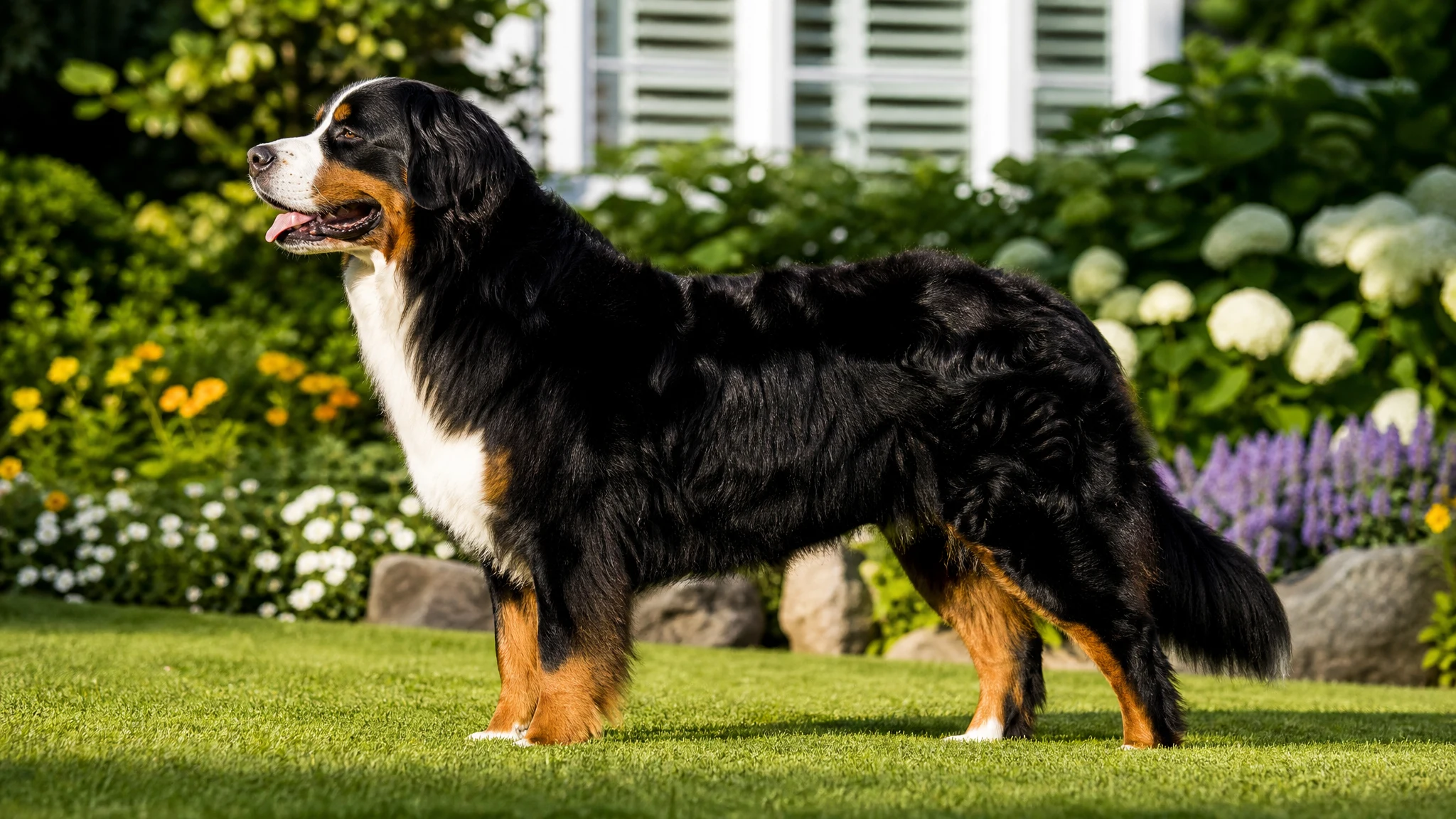
PetMD describes the Bernese Mountain Dog as a large breed, with adults typically weighing 70 to 115 pounds. Wikipedia lists males at 80 to 120 pounds and females at 75 to 100 pounds. Those are the sizes the breed is described by.
I found no source describing a separate, recognized "mini" version of the Bernese Mountain Dog, and I found no formula made for one. Because of that, I won't make claims about the size, health or lifespan of a "mini." If a seller makes those claims, ask them to show the evidence.
The Bernese Mountain Dog Club of America (BMDCA) is the place to ask about the breed and about breeders. The American Kennel Club is another place to check what is and isn't a recognized breed or variety.
What you need before you start
- Any written information from the seller or rescue about both parents, including their breed and adult weights.
- Your puppy's or dog's current weight and approximate age.
- The food bag or can you are considering, with its nutritional adequacy statement and ingredient list.
- A kitchen scale and a measuring cup.
- A notebook for weight and appetite notes.
- Your veterinarian's contact details.
Step 1: Find out what the dog really is
Start with the parents. A smaller dog sold under a "mini Bernese" label may have come from a different kind of pairing than a purebred Bernese. The label alone does not tell you.
Ask the seller in writing what the parents are and how much each weighs. Ask whether they will point you to the BMDCA or another official source for the breed's health information. A seller who can't or won't answer is giving you useful information.
If the dog is already with you, your veterinarian can give an estimate of likely adult size from age, frame and weight. Treat that as an estimate, not a promise.
Step 2: Decide which size category to plan around
Food choices depend on expected adult weight, not on a name. PetMD advises feeding Bernese puppies an AAFCO-compliant food designed for giant or large breeds, to support steady growth.
The Whole Dog Journal explains the label wording to look for. A puppy or all-life-stages food should say it supports growth "including growth of large-size dogs (70 pounds or more as an adult)." A statement that says "except for growth of large-size dogs" means the food is not meant for large-breed puppies.
If your dog's parents suggest an adult weight well under 70 pounds, that wording matters less. Ask your veterinarian which category fits. If the parentage is unknown, the safer plan is to ask your veterinarian before you assume a smaller dog will stay small.
Step 3: Read the label before the marketing
Turn the bag over. Look for three things:
- The AAFCO statement: does it say "growth," "maintenance" or "all life stages"?
- The large-size clause for any puppy food, as described above.
- The first several ingredients and the calories per cup.
Skip the pictures of mountains and the words "mini" or "small batch." They are not nutrition information.
Step 4: Compare a few foods by label data
For a size-based comparison, here are a few foods with published label data. None is made for a Bernese or a "mini" Bernese. They are large-breed or large-dog formulas. I compared label data only. I did not run feeding trials or taste tests.
| Food | Life stage | Calories per cup | Label note |
|---|---|---|---|
| Hill's Science Diet Puppy Large Breed Chicken & Brown Rice | Puppy | 387 kcal | Large breed puppy formula |
| Hill's Science Diet Adult Large Breed Chicken & Barley | Adult | 365 kcal | Large breed adult formula |
| Royal Canin Size Health Nutrition Large Puppy | Puppy, up to 15 months | 349 kcal | Page lists adult weight of 56 to 100 lb |
| Royal Canin Size Health Nutrition Large Adult | Adult | 360 kcal | Feeding table covers 57 to 97 lb |
| Freshpet Multi-Protein Puppy Recipe | Puppy | 241 kcal | AAFCO statement includes large-size dogs (70 lb or more as an adult) |
Calories per cup differ a lot between foods, so you can't swap one for another cup for cup. Royal Canin's pages give a weight range for each formula. A dog expected to fall outside those ranges is a question for your veterinarian. For a fuller side-by-side, see our comparison of foods for Bernese Mountain Dogs.
Step 5: Start from the label's feeding guide
Use the feeding chart on the package as a starting point, not a rule. Hill's says to adjust amounts as necessary to maintain optimal weight, and to ask your veterinarian if you are unsure. Royal Canin offers a feeding calculator on its product pages.
Weigh the dog every couple of weeks and write the number down. If weight climbs or stalls, your veterinarian can help you adjust.
Step 6: Set up meals to suit a deep-chested dog
PetMD notes that deep-chested dogs, dogs fed from raised bowls and dogs fed once a day have a higher risk of gastric dilatation-volvulus, also called bloat. PetMD advises two meals about 12 hours apart, a slow feeder and no elevated bowls.
PetMD also says puppies can be fed up to four meals a day. Whether a smaller or mixed-breed dog is deep-chested is something to ask your veterinarian. Don't assume it either way.
Tips and common mistakes
- Trusting the word "mini." It is not a nutrition category. Plan around expected adult weight and life stage.
- Skipping the large-size clause. A puppy food that says "except for growth of large-size dogs" is the wrong fit for a puppy expected to reach 70 pounds or more.
- Copying another dog's portions. Calories per cup vary widely, as the table shows.
- Switching foods suddenly. Ask your veterinarian how to change foods gradually.
- Treating a food as a health fix. PetMD lists a lean body weight as part of managing hip dysplasia, along with exercise and other measures. No food prevents or treats it. Your veterinarian decides what suits an individual dog.
- Buying a prescription diet on your own. Only a veterinarian prescribes those.
What to expect
A food that matches your dog's life stage and size may help support steady growth and a healthy body weight. Results vary by dog, and no label can promise an outcome.
Health is worth planning for whatever the dog's size. PetMD says Bernese Mountain Dogs are prone to several cancers, notably histiocytic sarcoma. Wikipedia reports elbow dysplasia prevalence of 13.91% to 26% in studies. These figures describe the breed, and a dog sold as a "mini" may or may not share them. The BMDCA says a lifespan of 7 to 8 years is too short for the breed and that some Berners reach their teens. PetMD gives 7 to 10 years. Neither source speaks to "mini" dogs.
The FDA has investigated a possible link between certain diets and canine dilated cardiomyopathy. Its latest update is dated December 23, 2022, and it does not plan further public updates until there is meaningful new scientific information. If you have questions about your dog's diet and heart health, raise them with your veterinarian.
Sources
- PetMD, Bernese Mountain Dog breed page
- Bernese Mountain Dog Club of America, health page
- Whole Dog Journal, In the Fine Print: Nutritional Adequacy Statements
- Wikipedia, Bernese Mountain Dog
- FDA CVM, investigation into diets and canine dilated cardiomyopathy
- Hill's Science Diet Puppy Large Breed
- Hill's Science Diet Adult Large Breed
- Royal Canin Size Health Nutrition Large Puppy
- Royal Canin Size Health Nutrition Large Adult
- Freshpet Multi-Protein Puppy Recipe