Human Foods Bernese Mountain Dogs Should Never Eat
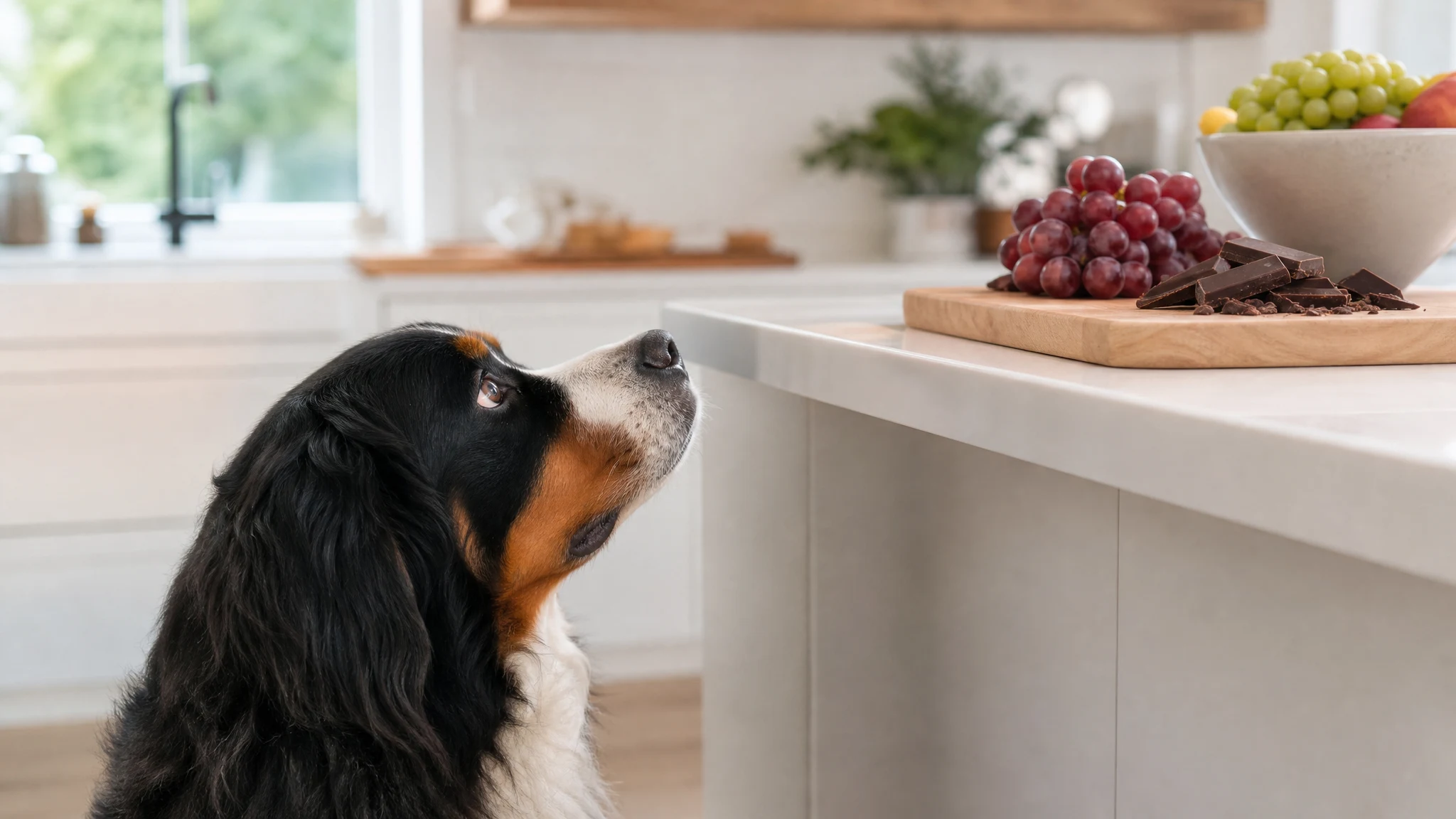
General nutrition information compiled from product labels and published sources, not veterinary advice. Your veterinarian is the right person to choose a diet for your dog, especially one with a health condition.
Many families ask what Bernese Mountain Dogs cannot eat, because a big, friendly dog often sits right under the dinner table. Berners are large dogs, but size does not make a toxic food safe. The answers below group the human foods dogs can't eat by theme, then cover safe snacks and what to do if your dog gets into something.
The toxic foods named here follow the list kept by ASPCA Animal Poison Control. This page gives no doses, because the risk depends on the individual dog and the food. If your dog has eaten something questionable, call a veterinarian or ASPCA Animal Poison Control right away.
The Basics
Can Bernese Mountain Dogs eat human food at all?
Some of it, yes. Plain, simple foods such as certain vegetables can work as occasional treats. The trouble comes from foods that are toxic, very fatty, heavily seasoned or hard to digest.
What can Bernese Mountain Dogs not eat?
The ASPCA's list of people foods to avoid includes chocolate, grapes and raisins, xylitol, onions and garlic, macadamia nuts and alcohol. Cooked bones, raw yeast dough and very fatty scraps also cause problems. Each is covered below.
Does a Berner's large size make toxic foods safe?
No. A bigger body does not make a poisonous food harmless, and reactions vary from dog to dog. Treat every item on the toxic list as off limits, whatever your dog weighs. PetMD lists Bernese adults at roughly 70 to 115 pounds, but weight is not a safety margin.
Toxic Foods to Keep Away From Your Dog
Is chocolate dangerous for a Bernese Mountain Dog?
Yes. ASPCA Animal Poison Control lists chocolate as toxic to dogs. Dark chocolate and baking chocolate are generally considered the most concerning, but no chocolate is a safe treat. Call for advice if your dog eats any.
Can Bernese Mountain Dogs eat grapes or raisins?
No. The ASPCA lists grapes and raisins as toxic, and they can be linked to kidney problems in dogs. The cause is not fully understood, so a small amount is not considered a safe test. This includes raisins hidden in cereal, trail mix and baked goods.
What is xylitol and why does it matter?
Xylitol is an artificial sweetener found in some sugar-free gum, candy, baked goods and peanut butters. ASPCA Animal Poison Control lists it as toxic to dogs. Check the ingredient label on anything sweetened that you share, and treat a xylitol exposure as an emergency.
Are onions and garlic harmful?
Yes. The ASPCA lists onions, garlic, chives and leeks as harmful to dogs, in raw, cooked or powdered form. This matters because many leftovers, soups and gravies are seasoned with them. Skip the table scraps.
Are macadamia nuts a problem?
Yes. Macadamia nuts appear on the ASPCA's list of foods to avoid for dogs. They often hide in cookies and snack mixes, so check what you share. Other nuts can be hard to digest or very fatty, so it is simpler to skip them.
Can a Bernese Mountain Dog have alcohol?
No. Alcohol is on the ASPCA's list of toxic items. Spilled drinks, unattended glasses and foods made with alcohol all count. Keep cups out of reach at gatherings.
What about coffee, tea and caffeine?
Caffeine is also on the ASPCA's list of items to keep away from dogs. That covers coffee grounds, tea bags and energy drinks. Store them where a tall Berner cannot reach the counter.
Is raw bread dough dangerous?
Yes. The ASPCA warns against raw yeast dough for dogs. The dough can rise in the stomach, and the ASPCA also notes the alcohol that yeast produces. Keep proofing dough covered and well out of reach.
What about avocado?
The ASPCA advises caution with avocado, and the pit is also a choking and blockage hazard. There are plenty of simpler snacks, so it is easier to leave it out. Ask your veterinarian if you have questions about a particular food.
Fatty, Salty and Hard-to-Digest Foods
Are cooked bones safe to chew?
Cooked bones can splinter and cause choking, mouth injuries or blockages. This is a common reason for emergency visits. Ask your veterinarian which chews suit your dog instead.
Is fatty meat, bacon or grease okay as a treat?
Rich, fatty scraps can upset a dog's stomach, and the ASPCA lists fatty foods as a concern. Holiday trimmings and bacon grease are common culprits. A sudden rich meal is a poor idea for any dog.
Can I share salty or seasoned leftovers?
It is best not to. Seasoned dishes often contain onion, garlic or lots of salt, and the ASPCA recommends avoiding salty snacks. Plain foods are a safer choice than leftovers from your plate.
Safe Snacks and Smarter Treats
Which snacks can Bernese Mountain Dogs eat?
Many dogs do well with plain carrots, green beans or apple slices without seeds or core. Offer a new food in a small piece and watch for stomach upset. Ask your veterinarian before adding anything regularly.
How do treats fit into a Berner's diet?
Treats should stay a small part of the day's food. PetMD lists keeping a lean body as part of managing hip dysplasia, so extra calories matter for this breed. The label-data comparison of large-breed dog foods shows how calories per cup differ.
Bloat and Big-Dog Feeding Habits
Does how I feed my Berner matter as much as what?
It can. PetMD says deep-chested dogs, dogs fed once a day and dogs fed from raised bowls are at higher risk of bloat (gastric dilatation-volvulus). PetMD advises two meals about 12 hours apart, a slow feeder and no elevated bowls.
Should I worry about my Berner eating too fast or stealing food?
Fast, large gulps are a good reason to use a slow feeder, as PetMD suggests. Keep trash, counters and food storage secured so grabbing a whole loaf or bag is not possible. Talk to your veterinarian about bloat warning signs.
If Your Dog Eats Something Dangerous
What should I do right away?
Call your veterinarian or ASPCA Animal Poison Control without waiting for symptoms. Have the food, the packaging and your dog's approximate weight ready. Do not try home remedies or induce vomiting unless a professional tells you to.
Who decides how serious it is?
A veterinarian or poison control professional makes that call for your individual dog. Look up the current ASPCA Animal Poison Control number on the ASPCA website and keep it, along with your veterinarian's and an emergency clinic's numbers, somewhere easy to find. Fees may apply for poison control calls, so check with the service.
Choosing a Complete Food
Table scraps cannot replace a complete and balanced diet. For a Bernese Mountain Dog, a veterinarian can help choose between large-breed puppy, adult and senior foods. We compared label data from brands, and we did not run feeding trials or taste tests. See the Bernese Mountain Dog food comparison for details.