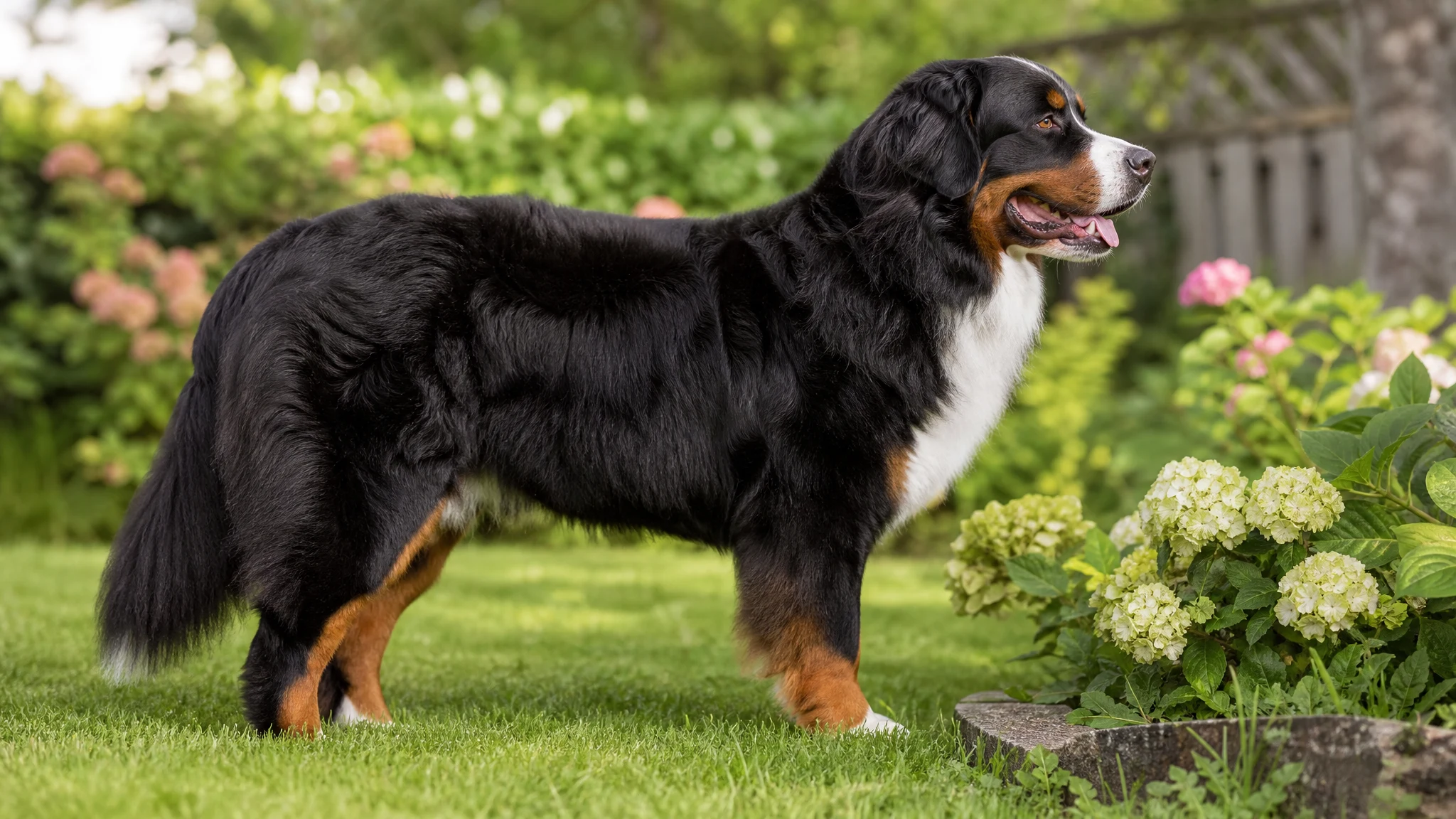
Bernese Mountain Dog x Labrador Mix: What to Expect
General nutrition information compiled from product labels and published sources, not veterinary advice. Your veterinarian is the right person to choose a diet for your dog, especially one with a health condition.
A Bernese Mountain Dog Lab mix is a crossbreed, not a standard breed. Puppies in one litter can differ a lot in size, coat and temperament. No breed standard says how any one puppy will turn out.
This guide is a step-by-step plan for the first year, with a focus on food and health. It covers what a Bernese parent can add to the picture and what you should confirm with the breeder or rescue and your veterinarian. We can speak to the Bernese side with sources. For the Labrador side, check with a Labrador breed club or your veterinarian.
What You Need Before You Start
- Any records from the breeder or rescue: the parents' sizes, health screening results and the puppy's age and weight.
- A veterinarian you can book for a first visit and regular weight checks.
- A food labeled for large-breed growth (more on the wording below).
- A slow feeder bowl and a floor-level bowl stand-in, such as a plain bowl on the floor.
- A kitchen scale or measuring cup so you can feed the same amount each time.
- A notebook or phone note for weight, meals and stool quality.
Step 1: Understand What You Know and What You Do Not
The Bernese Mountain Dog is a large breed. PetMD lists adult weight at 70 to 115 lb. Wikipedia gives 80 to 120 lb for males and 75 to 100 lb for females. A mix with a Labrador could land below, inside or near that range, and nobody can promise where.
Ask the breeder or rescue how big both parents are. Then ask your veterinarian to track your puppy's growth curve. Do not assume the puppy will be a smaller, easier Bernese.
Common mistake: Treating a mix as healthier or less risky by default. Health risks depend on the individual dog and the parents. Ask for health screening records instead of relying on the idea of hybrid vigor.
Step 2: Learn the Bernese Health Risks That Affect Feeding
Some Bernese concerns relate to diet and body condition. A mix may or may not inherit them, so ask your veterinarian which ones to watch for.
- Bloat (gastric dilatation-volvulus). PetMD says deep-chested dogs, dogs fed from raised bowls and dogs fed once a day are at higher risk. It advises two meals about 12 hours apart, a slow feeder and no elevated bowls.
- Hip and elbow dysplasia. PetMD lists a lean body, low-intensity exercise, omega-3s and joint supplements as part of managing hip dysplasia. Wikipedia reports elbow dysplasia prevalence in Bernese of 13.91% to 26% across studies. Ask your veterinarian before starting any supplement.
- Cancer. PetMD notes the breed is prone to several cancers, notably histiocytic sarcoma. Food does not prevent cancer, so regular veterinary checkups matter more than any bag claim.
Lifespan sources differ. PetMD gives 7 to 10 years for Bernese. The Bernese Mountain Dog Club of America says 7 to 8 years is too short and that some Berners reach their teens. For a mix, ask your veterinarian rather than relying on one number.
Step 3: Choose a Large-Breed Puppy Food by Reading the Label
PetMD advises feeding Bernese puppies an AAFCO-compliant food designed for giant or large breeds, to support steady growth. Because your puppy has a Bernese parent and could be large, this is a sensible starting point until your veterinarian says otherwise.
Look at the nutritional adequacy statement on the bag. Whole Dog Journal explains that foods for growth or all life stages carry one of two kinds of wording:
- "including growth of large-size dogs (70 pounds or more as an adult)" means the food suits large-breed puppies.
- "except for growth of large-size dogs" means it does not.
Choose the "including" wording. Then compare the ingredient list, calories per cup and the guaranteed analysis. Our Bernese Mountain Dog food comparison lays out label data for several large-breed foods. We compared label data only. We did not run feeding trials or taste tests.
No food we found is made specifically for Bernese mixes, and none is made for Bernese Lab mixes. Size-appropriate formulas are the realistic option.
Step 4: Set Up Meals to Lower Bloat Risk
- Split the day into meals. PetMD suggests puppies can eat up to four meals a day. Adults do better on two meals about 12 hours apart, not one big meal.
- Use a slow feeder. This slows fast eaters. Many mixes with a Labrador parent may gulp, so watch your own dog.
- Keep bowls on the floor. PetMD advises against elevated bowls for Bernese.
- Keep meals calm. Let your dog rest after eating. Ask your veterinarian how long to wait before hard exercise.
Tip: Learn the signs of bloat now, such as a swollen belly, unproductive retching and restlessness. Bloat is an emergency. Call a veterinarian right away if you see them.
Step 5: Start with the Label Feeding Guide, Then Adjust
Every brand prints a feeding chart. Treat it as a starting point. For example, Hill's says to adjust amounts as necessary to maintain optimal weight and to ask your veterinarian if you are unsure. Royal Canin offers a feeding calculator on its product pages.
- Weigh your puppy and write down the number.
- Find the matching row in the feeding chart.
- Measure each meal the same way every time.
- Check your puppy's weight and body shape every two to four weeks, or on the schedule your veterinarian sets.
- Adjust the amount only after talking to your veterinarian.
Common mistake: Letting a puppy grow as fast as possible. PetMD stresses steady growth for large breeds. Keeping a lean body is also part of managing hip dysplasia, per PetMD.
Step 6: Plan Treats, Toppers and Food Changes
- Count treats as part of the daily food, and keep them small.
- If you add a topper, such as canned food, reduce the main meal. Hill's lists maintenance amounts for its canned adult recipe by dog weight, which shows how much food counts toward daily calories.
- Switch foods gradually over about a week. Watch stool and appetite.
- Ask your veterinarian before adding supplements. Do not guess at amounts.
Step 7: Move to Adult Food at the Right Time
We could not find a published age when Bernese are considered adult, so ask your veterinarian when to switch. Royal Canin's large puppy formula, for example, is labeled for puppies up to 15 months. That is one brand's label, not a rule for every dog.
When you switch, choose an adult formula with an AAFCO maintenance statement. Large-breed adult formulas exist from brands such as Hill's Science Diet and Royal Canin. Later, ask your veterinarian whether a senior formula suits your dog. Any prescription diet is something only a veterinarian prescribes.
About Grain-Free and Heart Health
You may see questions about diet and canine dilated cardiomyopathy (DCM). The FDA investigated a possible link between certain diets and DCM. Its latest update is dated 12/23/2022. The FDA said it does not intend to release further public updates until there is meaningful new scientific information. Ask your veterinarian whether the food you chose is a good fit for your individual dog.
Expected Results
With a steady routine, you may see a puppy who grows at a steady pace, keeps a lean body shape and has regular stools. A food label cannot promise these results. Genetics, exercise and veterinary care all play a part.
No food prevents, treats or cures hip dysplasia, elbow dysplasia, cancer, DCM or bloat. Good feeding habits are one part of care. Your veterinarian decides what is right for your dog.
Quick Checklist of Mistakes to Avoid
- Guessing adult size instead of asking about both parents.
- Feeding one large meal a day.
- Using a raised bowl.
- Choosing an "except for growth of large-size dogs" food for a puppy.
- Following the chart without checking body condition.
- Starting supplements without veterinary advice.
Sources
- PetMD, Bernese Mountain Dog breed page
- Bernese Mountain Dog Club of America, health page
- Whole Dog Journal, nutritional adequacy statements
- Wikipedia, Bernese Mountain Dog
- FDA CVM, diets and canine dilated cardiomyopathy
- Hill's Science Diet, Puppy Large Breed
- Royal Canin, Size Health Nutrition Large Puppy