Bernese Mountain Dog vs Saint Bernard: Which One Should You Get?
General nutrition information compiled from product labels and published sources, not veterinary advice. Your veterinarian is the right person to choose a diet for your dog, especially one with a health condition.
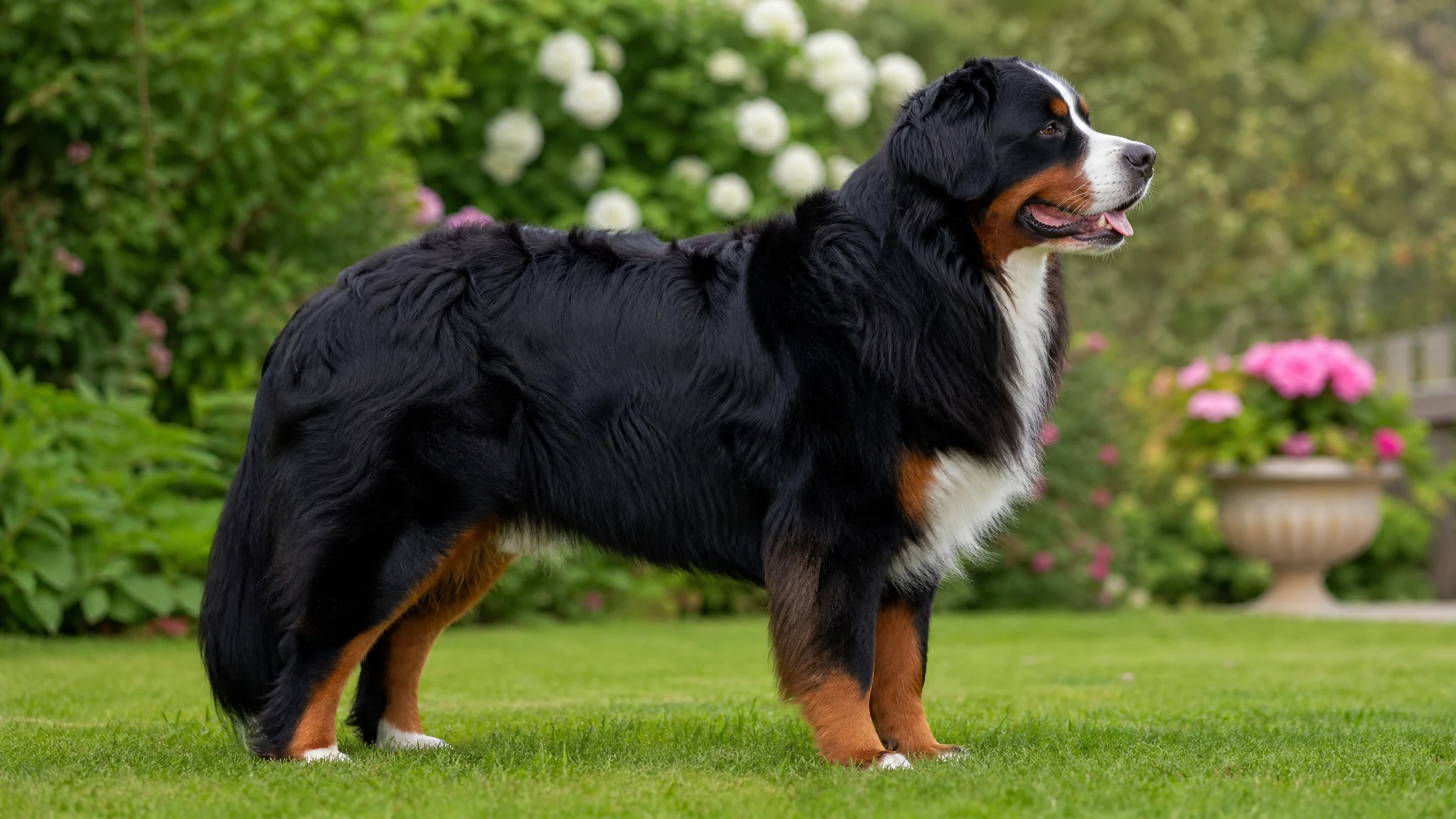
Choosing between a Bernese Mountain Dog and a Saint Bernard is not a coin flip. Both are big, gentle-looking dogs with big appetites and big vet considerations. Comparing a Bernese Mountain Dog vs St Bernard on looks alone leaves out the parts that shape your daily life: space, feeding, health costs, and how long you can expect to share your home with the dog.
This guide walks you through the decision in order. It is built around what is documented for the Bernese. For Saint Bernard specifics, it points you to the breed's own sources rather than guessing.
What You Need Before You Start
- A tape measure and a realistic sketch of your living space, including stairs and car size.
- A notebook for comparing answers from breeders, breed clubs, and your veterinarian.
- The current AKC breed pages and the Saint Bernard Club of America materials for the Saint Bernard side. Check the clubs directly for size, lifespan, and health details.
- The Bernese Mountain Dog Club of America (BMDCA) health page for the Bernese side.
- A monthly budget line for food, since both breeds are large dogs.
Step 1: Start With Size and Space
PetMD lists the Bernese Mountain Dog as a large breed, with adults weighing about 70 to 115 pounds. Wikipedia's breed entry gives somewhat different ranges: 80 to 120 pounds for males and 75 to 100 pounds for females. Sources differ a little, so treat these as a range, not a promise for any one dog.
For the Saint Bernard, look up the breed standard on the AKC breed page or the Saint Bernard Club of America site. Write down the weight range and compare it with the Bernese numbers above. Then ask each breeder about the parents' actual sizes.
Now apply it to your home. Can you lift the dog into a car or onto a vet table if it is injured? Are there stairs you use every day? A dog you cannot physically move is a safety issue, not just an inconvenience.
Step 2: Look at Lifespan Honestly
PetMD gives a Bernese lifespan of 7 to 10 years. The BMDCA health page says that a figure of 7 to 8 years is too short, and notes that some Berners reach their teens. Wikipedia cites studies ranging from about 8 to 10.1 years.
That spread matters. No source can tell you how long one puppy will live. Ask for the Saint Bernard lifespan from the Saint Bernard Club of America, and write both ranges down side by side with the source named.
Step 3: Review Breed Health Concerns That Affect Daily Care
For the Bernese, PetMD says the breed is prone to several cancers, notably histiocytic sarcoma. It also describes hip dysplasia management as keeping a lean body, low-intensity exercise, and, according to PetMD, options such as omega-3s and joint supplements. Wikipedia reports elbow dysplasia as common in the breed, with studies giving figures from 13.91% to 26%.
Bloat (gastric dilatation-volvulus) is a feeding-related concern. PetMD says deep-chested dogs, dogs fed from raised bowls, and dogs fed once a day are at higher risk. Its advice is two meals about 12 hours apart, a slow feeder, and no elevated bowls.
None of this means a food prevents or treats these conditions. Diet is one part of care, and your veterinarian decides what suits an individual dog.
For the Saint Bernard, ask the breed club which health screenings breeders are expected to do. Then ask your veterinarian whether the same feeding precautions apply. Do not assume they are identical or different without checking.
Step 4: Price Out Feeding
Food is where the two breeds look most alike on paper, because both need large-breed formulas. No brand lists a Bernese Mountain Dog formula, so the practical choice is a food made for large dogs. We compared label data only. We did not run feeding trials or taste tests, so nothing here is a report on how any dog did on a food.
Here is how a few large-breed adult labels compare, using the brands' own published numbers:
| Food | Calories per cup | First ingredient listed |
|---|---|---|
| Hill's Science Diet Adult Large Breed Chicken & Barley | 365 kcal | Chicken |
| Royal Canin Size Health Nutrition Large Adult | 360 kcal (calculated) | Chicken by-product meal |
Calories per cup tell you how fast a bag will disappear. A dog near 100 pounds eating a few cups a day goes through food quickly, so multiply before you commit. For a fuller side-by-side, see our comparison of foods for Bernese Mountain Dogs.
Each brand's feeding guide is a starting point. Hill's says to adjust amounts to maintain optimal weight and to ask your veterinarian if unsure.
Step 5: Plan for the Puppy Stage
PetMD advises feeding Bernese puppies an AAFCO-compliant food designed for giant or large breeds to support steady growth, with up to four meals a day. On the label, look for the wording "including growth of large-size dogs (70 pounds or more as an adult)." Whole Dog Journal explains that an "except for growth of large-size dogs" statement means the food is not meant for large-breed puppies.
Adult Bernese weigh 70 pounds or more, so the "including" wording is the one to look for. Ask the Saint Bernard breeder what they feed and why, then check the label wording yourself.
Step 6: Compare Temperament and Lifestyle Fit
Temperament claims are easy to repeat and hard to verify. Read the AKC breed descriptions for both, then ask each breeder about the parents' behavior. Spend time with adult dogs of both breeds if you can. Ask owners what a normal week looks like: exercise, grooming, and time alone.
Also consider climate and your own routine. Both breeds are large, so ask each breed club about heat tolerance and exercise needs for your area instead of relying on general impressions.
Step 7: Make the Decision
Go back to your notebook. For each breed, you should have size, lifespan range, health screenings, monthly food cost, and notes from at least one breeder and one veterinarian. If one breed clearly fails on space or budget, the choice is made. If they tie, spend more time with adult dogs of each breed.
Tips
- Write the source next to every number. Ranges from different sources rarely match exactly.
- Ask breeders for health testing documentation and check it with the breed club.
- Keep the dog lean. PetMD lists a lean body as part of hip dysplasia management for Bernese.
- Split meals and use a slow feeder, as PetMD suggests for bloat risk in Bernese.
- Raise any diet questions with your veterinarian before changing foods.
Common Mistakes to Avoid
- Choosing on photos. Puppy pictures say nothing about adult size or care costs.
- Trusting one weight number. Sources disagree, and individual dogs vary.
- Feeding once a day. PetMD names this as a bloat risk factor.
- Using raised bowls. PetMD advises against elevated bowls for Bernese.
- Buying an adult food for a puppy. Check for the large-size growth wording.
- Treating a food as a health fix. No food prevents or cures cancer, dysplasia, or bloat.
- Assuming a grain-free or trendy label is safer. The FDA has investigated possible links between certain diets and canine dilated cardiomyopathy. Its last public update was dated 12/23/2022, and it does not plan further updates until there is meaningful new scientific information. Ask your veterinarian about it.
What to Expect
If you follow these steps, you will likely end up with a clearer, better-sourced picture of both breeds and a realistic monthly cost. That should make it easier to choose with confidence. Results depend on the individual dog, the breeder, and your household, so none of this guarantees how a particular dog will turn out.
Whichever breed you pick, plan to work with a veterinarian on weight, feeding schedule, and screenings from the first visit.
Sources
- PetMD, Bernese Mountain Dog breed page
- Bernese Mountain Dog Club of America, health page
- Wikipedia, Bernese Mountain Dog
- Whole Dog Journal, nutritional adequacy statements
- FDA CVM, investigation into diets and canine dilated cardiomyopathy
- Hill's Pet, Science Diet Adult Large Breed
- Royal Canin, Size Health Nutrition Large Adult