Bernese Mountain Dog Temperament: What New Owners Should Know
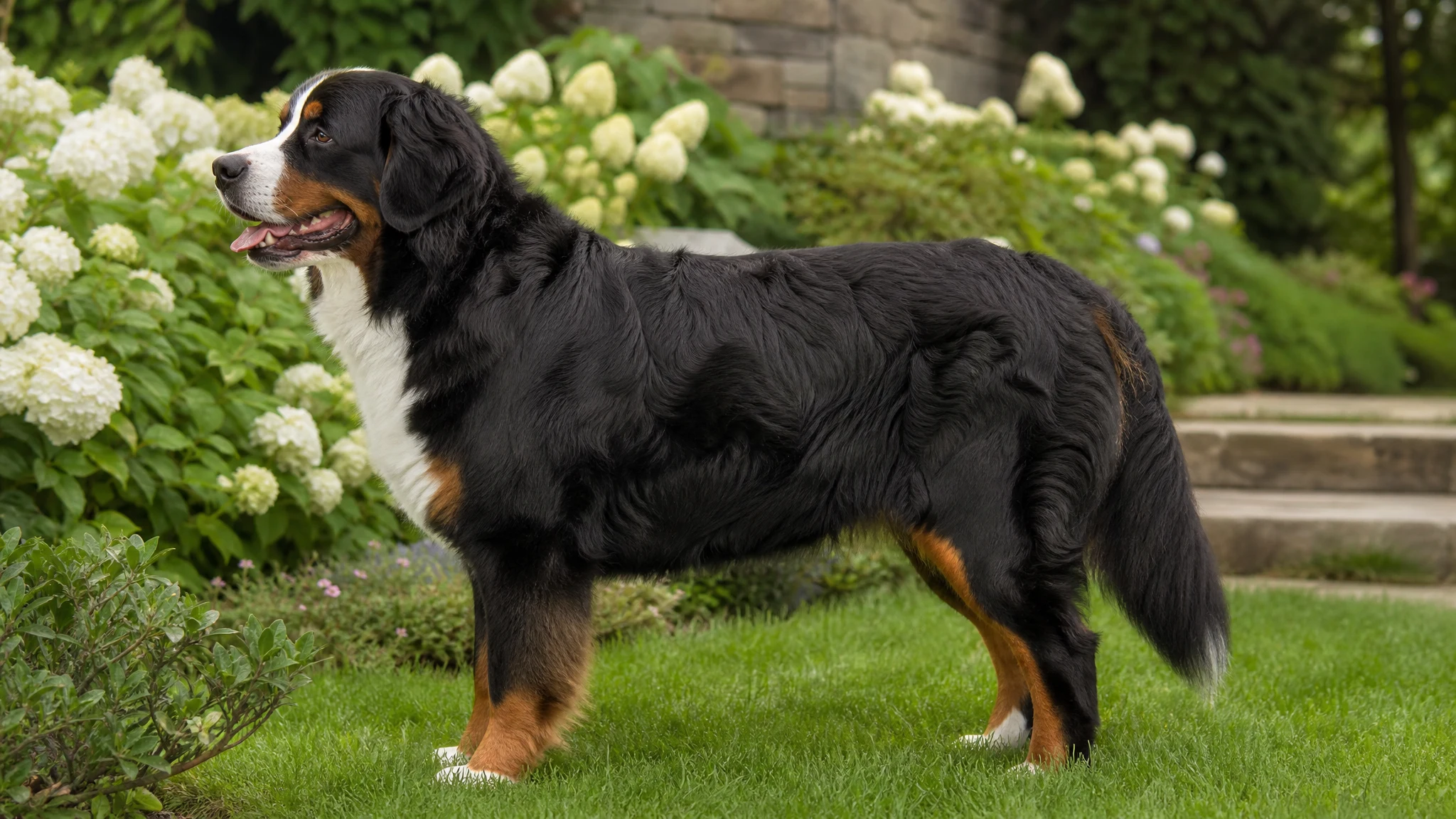
General nutrition information compiled from product labels and published sources, not veterinary advice. Your veterinarian is the right person to choose a diet for your dog, especially one with a health condition.
New owners often ask what Bernese Mountain Dog temperament is really like. The honest answer starts with a limit. Temperament is how an individual dog behaves, and it comes from breeding, early experience, health and training, not from a breed label alone.
This guide does not hand you a list of personality traits to expect. For the breed's own description of its character, read the Bernese Mountain Dog Club of America (BMDCA) and American Kennel Club (AKC) breed pages, and ask a breeder or rescue about the parents and the individual puppy. What we can do here is give you a method. You will learn to observe your dog, build calm routines, train with rewards and connect daily feeding to behavior.
What You Need Before You Start
- A notebook or phone notes to record your dog's behavior each day.
- A slow feeder bowl, placed at floor level. PetMD's breed page advises a slow feeder and no elevated bowls for this deep-chested breed.
- A measuring cup, so meals and treats are counted rather than guessed.
- Small, soft rewards. Part of the daily food can serve as training rewards.
- A properly fitted flat collar or a harness, and a standard leash.
- The contact details of your breeder or rescue, and of a veterinarian you trust.
Step 1: Know What Kind of Dog You Are Living With
PetMD lists the Bernese Mountain Dog as a large breed, with adults weighing roughly 70 to 115 pounds. That size matters for temperament work, because a dog that is awkward at 20 pounds becomes much harder to manage at 90.
Start by reading the BMDCA and AKC breed descriptions. Then write down what your breeder or rescue tells you about your dog's parents, litter and early weeks. Treat all of it as background. Your own dog may match it closely or not at all.
Common mistake: assuming every dog of a breed will behave the same way. Judge the dog in front of you.
Step 2: Watch and Record for the First Two Weeks
Before you try to change anything, observe. Each day, jot down a few lines on:
- How your dog reacts to new people, other dogs, noises and surfaces.
- How quickly your dog settles after play or a walk.
- Appetite, energy and any sudden change in behavior.
Notes like these help in two ways. They show which situations need patient practice. They also give your veterinarian something concrete if behavior shifts, since pain or illness can change how a dog acts. A sudden change in mood is a reason to call the veterinarian, not to assume a training problem.
Step 3: Build a Predictable Daily Routine
Dogs usually find it easier to relax when the day has a pattern. Pick regular times for meals, walks, play, training and rest, and keep them similar from day to day.
Feeding times are the easiest anchor. PetMD's breed page notes that deep-chested dogs, dogs fed from raised bowls and dogs fed once a day are at higher risk of gastric dilatation-volvulus, often called bloat. It advises two meals about 12 hours apart, a slow feeder and no elevated bowls. A twice-daily schedule therefore does double duty, because it gives your dog structure and follows that advice.
Puppies need more meals. PetMD advises up to four a day for puppies. Ask your veterinarian how to move to fewer meals as your dog grows.
Common mistake: leaving food out all day. You lose the routine, and you cannot tell how much your dog is eating.
Step 4: Train With Rewards, Not Force
Use humane, reward-based methods, in line with the position of the American Veterinary Society of Animal Behavior (AVSAB). Mark the behavior you want, such as sitting, walking beside you or settling on a mat, and reward it right away. Keep sessions short and end while your dog is still keen.
- Pick one skill. Start with something simple, such as sit or coming when called indoors.
- Reward within a second or two. Quick timing helps your dog connect the reward to the action.
- Add distance and distraction slowly. Move to the yard only after the skill is reliable in the living room.
- Stop before frustration. A few minutes, several times a day, is easier on a young dog than one long session.
Avoid shock, prong or choke collars, alpha rolls, scruffing and any dominance-based method. They add fear and pain, and they do not teach your dog what to do instead.
Step 5: Count Rewards as Part of the Meal
Frequent training means many treats. For a dog that PetMD says should stay lean, that adds up. In its hip dysplasia section, PetMD lists keeping a lean body among the ways to manage the condition.
The simplest approach is to measure the day's food and set aside a portion as rewards. Many label feeding guides carry the same advice. Hill's Science Diet pages, for example, say to adjust feeding amounts as necessary to maintain optimal weight and to ask your veterinarian if you are unsure. Treat any feeding guide as a starting point. Your veterinarian decides what is right for your individual dog.
If you are still choosing a food, our comparison of foods for Bernese Mountain Dogs sets out label data side by side. We compared labels only. We did not run feeding trials or taste tests.
Step 6: Match the Food to the Life Stage
Growing puppies and adults have different needs, and the label tells you which a food is made for. Whole Dog Journal explains that foods for growth or for all life stages carry one of two statements. One says the food is suitable for growth "including growth of large-size dogs (70 pounds or more as an adult)." The other uses "except for" wording and is not meant for large-breed puppies. Since adult Bernese weigh 70 pounds or more, look for the "including" wording when choosing a puppy food.
PetMD also advises feeding puppies an AAFCO-compliant food designed for giant or large breeds to support steady growth.
No food we found is made specifically for Bernese Mountain Dogs. The options are large-breed formulas. Check each brand's own page for current label details, and talk to your veterinarian before switching.
Common mistake: changing foods often in search of a behavior fix. Food is one part of the picture. It is not a substitute for training, exercise and veterinary care.
Step 7: Plan for Health, Because It Shapes Behavior
A dog in pain or feeling unwell may seem withdrawn, irritable or restless. Knowing the breed's health risks helps you notice changes early.
- Cancer. PetMD says the breed is prone to several cancers, notably histiocytic sarcoma.
- Joints. PetMD describes hip dysplasia management as including a lean body, low-intensity exercise, omega-3s and joint supplements. Wikipedia reports elbow dysplasia studies ranging from 13.91% to 26%. Ask your veterinarian before giving any supplement.
- Lifespan. PetMD gives 7 to 10 years. The BMDCA health page says 7 to 8 years is too short, and that some Berners reach their teens. Ranges differ between sources, so use them as general context only.
If you read about heart disease and diet, the U.S. Food and Drug Administration (FDA) has investigated a possible link between certain diets and canine dilated cardiomyopathy. Its latest update is dated December 23, 2022, and it says it does not plan further public updates until there is meaningful new scientific information. Read the FDA page yourself and ask your veterinarian about your dog's diet.
Tips for Smoother Progress
- Keep outings calm and short at first, and add new experiences one at a time.
- Reward calm behavior around visitors, not just tricks.
- Rest after meals rather than hard play. Ask your veterinarian for guidance on timing.
- Be patient. Large breeds mature slowly, and puppy behavior can last a while.
Common Mistakes to Avoid
- Relying on a breed description instead of watching your own dog.
- Using punishment or intimidation when a puppy makes a mistake.
- Letting treats pile on top of full meals.
- Feeding one large meal a day or using raised bowls.
- Putting a behavior change down to temperament without ruling out a health cause.
What Results to Expect
With steady routines, reward-based training and regular veterinary care, many owners find their dog becomes easier to read and settle over the following weeks and months. Results vary from dog to dog, and no method can promise a particular outcome.
Feeding on a schedule and keeping rewards inside the daily ration may help you keep your dog at a healthy weight. It cannot prevent or treat any condition. If you have concerns about aggression, fear, a change in appetite or a sudden shift in behavior, contact your veterinarian. They can refer you to a qualified behavior professional if needed.
Sources
- PetMD, Bernese Mountain Dog breed page
- Bernese Mountain Dog Club of America, health page
- Whole Dog Journal, In the Fine Print: Nutritional Adequacy Statements
- FDA Center for Veterinary Medicine, investigation into diets and canine dilated cardiomyopathy
- Wikipedia, Bernese Mountain Dog (secondary source)
- Hill's Science Diet, Adult Large Breed dry dog food