Bernese Mountain Dog Mixes: Which One Fits Your Lifestyle?
General nutrition information compiled from product labels and published sources, not veterinary advice. Your veterinarian is the right person to choose a diet for your dog, especially one with a health condition.
Bernese Mountain Dog mixes attract a lot of interest, and the appeal is easy to see. But a mix is not a defined breed, so two puppies from the same pairing can grow into quite different adults. That makes a calm, step-by-step approach more useful than picking a name that sounds right.
This guide walks through how to match a mix to your household. It also covers how to feed one sensibly, since size and growth rate drive most food decisions. It does not name a single best mix, because no source we relied on ranks them.
What you need before you start
- A written list of your daily routine: work hours, exercise time, travel, and who is home.
- Notes on your home: yard or apartment, stairs, climate, and other pets.
- Details on both parent breeds, ideally from the breeder or rescue, including each parent's adult weight.
- Health records for the parents, if a breeder or rescue can share them.
- The name of a veterinarian you can ask about feeding and growth.
- A kitchen scale and a measuring cup, for portioning food later.
Step 1: Start with what the Bernese side brings
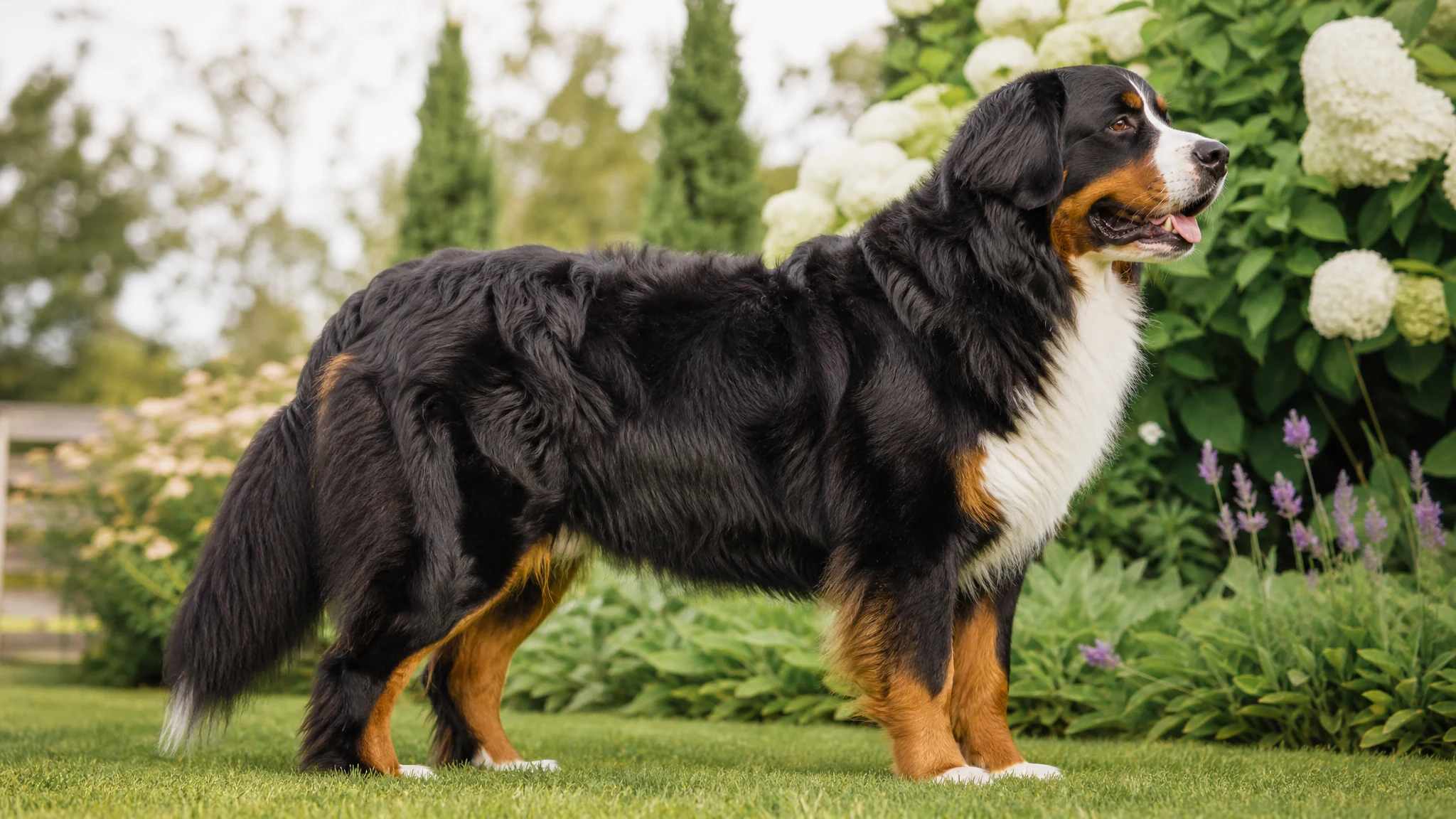
PetMD lists the Bernese Mountain Dog as a large breed, with adults of roughly 70 to 115 pounds. Other references give slightly different ranges, so treat that as a ballpark. A mix may land above, below or inside that range depending on the other parent.
PetMD also notes that the breed is prone to several cancers, notably histiocytic sarcoma. The Bernese Mountain Dog Club of America (BMDCA) says a lifespan of 7 to 8 years is too short a figure and that some Berners reach their teens. PetMD gives 7 to 10 years. The sources differ, so no one can promise a lifespan for a mix.
None of this tells you what a particular mix will inherit. It only tells you what to ask about.
Step 2: Match size to your space and strength
Ask the breeder or rescue for the adult weights of both parents. A dog near the top of the Bernese range is a lot of dog to lift into a car or help up stairs. A smaller mix may be easier to handle, but nobody can guarantee where a puppy ends up.
Be honest about your own limits. If you cannot comfortably lift 70 pounds, plan around that now, not after the puppy has grown.
Step 3: Match energy and time to your routine
Look at your list from the start and compare it with what each parent breed needs. If the second parent is a high-energy breed, the puppy may need more exercise than a typical Bernese. If you are away ten hours a day, a dog that struggles with being alone is a poor fit, whatever its mix.
Training should be reward-based, in line with the American Veterinary Society of Animal Behavior (AVSAB). Treats, praise and play teach a large puppy well, and harsh corrections can damage trust. Start early, because a big adult is harder to manage if manners were skipped.
Step 4: Ask the right questions about health
A mix does not automatically avoid the health problems of its parent breeds. Ask for the parents' health records and what screening was done. The BMDCA health page is a good place to see what the breed club considers important.
Two conditions matter for feeding. PetMD describes bloat (gastric dilatation-volvulus) as a higher risk in deep-chested dogs. It also notes that hip dysplasia management includes keeping a lean body. A published figure for elbow dysplasia in Bernese runs from 13.91% to 26% across studies, according to Wikipedia, a secondary source. A veterinarian decides what applies to your individual dog.
Step 5: Choose a growth-appropriate food
For a puppy likely to be a large adult, PetMD advises AAFCO-compliant food designed for giant or large breeds, to support steady growth. It also suggests up to four meals a day for puppies.
Read the nutritional adequacy statement on the bag. Whole Dog Journal explains the wording to look for: "including growth of large-size dogs (70 pounds or more as an adult)." A statement that says "except for" growth of large-size dogs means the food is not meant for large-breed puppies. If your mix could pass 70 pounds, choose the "including" wording, and ask your veterinarian if the adult size is uncertain.
No Bernese Mountain Dog mix formula turned up in the brand pages we compared, so the realistic choice is a food made for large dogs. Here are examples with the label data each brand publishes:
| Food | Stage | Label detail |
|---|---|---|
| Hill's Science Diet Puppy Large Breed Chicken & Brown Rice | Puppy, dry | 387 kcal per cup; chicken is the first ingredient |
| Royal Canin Size Health Nutrition Large Puppy | Puppy, dry | Adult weight of 56 to 100 lb; 349 kcal per cup; protein 28% min, fat 14% min |
| Freshpet Multi-Protein Puppy Recipe | Puppy, fresh | Statement covers growth of large-size dogs (70 lb or more as an adult); 241 kcal per cup |
| Victor Hi-Pro Plus Large Breed Puppy | Puppy, dry | All life stages statement; 365 kcal per cup; protein 30% min |
| Hill's Science Diet Adult Large Breed Chicken & Barley | Adult, dry | 365 kcal per cup |
| Royal Canin Size Health Nutrition Large Adult | Adult, dry | 360 kcal per cup; protein 24% min, fat 15% min |
This is a comparison of label data only. We did not run feeding trials or taste tests. Hill's publishes dry matter averages, not guaranteed minimums, so its numbers cannot be lined up directly with the others. Calorie counts differ widely, especially for fresh food, so compare per-cup calories before you compare cup counts. For a fuller side-by-side, see our comparison of foods for Bernese Mountain Dogs.
On the FDA's investigation into diets and canine dilated cardiomyopathy, its latest update is dated 12/23/2022. The agency says it does not plan further public updates until there is meaningful new scientific information. If you have questions about diet and heart health, ask your veterinarian.
Step 6: Set up feeding to lower bloat risk
PetMD says deep-chested dogs, dogs fed from raised bowls and dogs fed once a day are at higher risk of bloat. Its advice is two meals about 12 hours apart, a slow feeder, and no elevated bowls. A mix with a deep chest may share this risk, so it is reasonable to follow that advice and raise it with your veterinarian.
Step 7: Portion carefully and adjust
Use the brand's feeding guide as a starting point only. Hill's advises adjusting amounts as necessary to maintain optimal weight, and to ask your veterinarian if you are unsure. Weigh the food, track your dog's body condition every few weeks, and change portions in small steps.
For senior mixes, Hill's has an Adult 6+ Large Breed recipe, and Victor lists a Senior Healthy Weight formula. Neither is specific to Bernese mixes. Check each brand page and talk to your veterinarian before switching.
Tips and common mistakes
- Choosing by looks. Coat color and fluff say little about size, energy or health.
- Assuming a mix is healthier. No source we relied on supports that, so ask for records.
- Feeding an adult food to a large puppy. Check the adequacy statement for the "including" wording.
- Feeding once a day from a raised bowl. PetMD flags both as bloat risk factors.
- Treating the feeding chart as a rule. It is a starting point, and bodies differ.
- Switching foods suddenly. Change over gradually and ask your veterinarian how.
- Skipping early training. Use rewards while the puppy is still small enough to guide easily.
What to expect
If you follow these steps, you may find it easier to choose a dog whose size and energy suit your household. Steady, large-breed-appropriate feeding may support even growth, and a lean body condition may help keep your dog comfortable as it ages. None of this is a guarantee. Mixes vary, and a veterinarian is the right person to judge what your individual dog needs, including whether any prescription diet is appropriate.
Sources
- PetMD, Bernese Mountain Dog breed page
- Bernese Mountain Dog Club of America, health page
- Wikipedia, Bernese Mountain Dog
- Whole Dog Journal, nutritional adequacy statements
- FDA Center for Veterinary Medicine, diets and canine dilated cardiomyopathy
- Hill's Pet Nutrition
- Royal Canin
- Freshpet
- Victor Pet Food