What Is a Golden Mountain Dog? Golden Retriever x Bernese Mountain Dog Mix
General nutrition information compiled from product labels and published sources, not veterinary advice. Your veterinarian is the right person to choose a diet for your dog, especially one with a health condition.
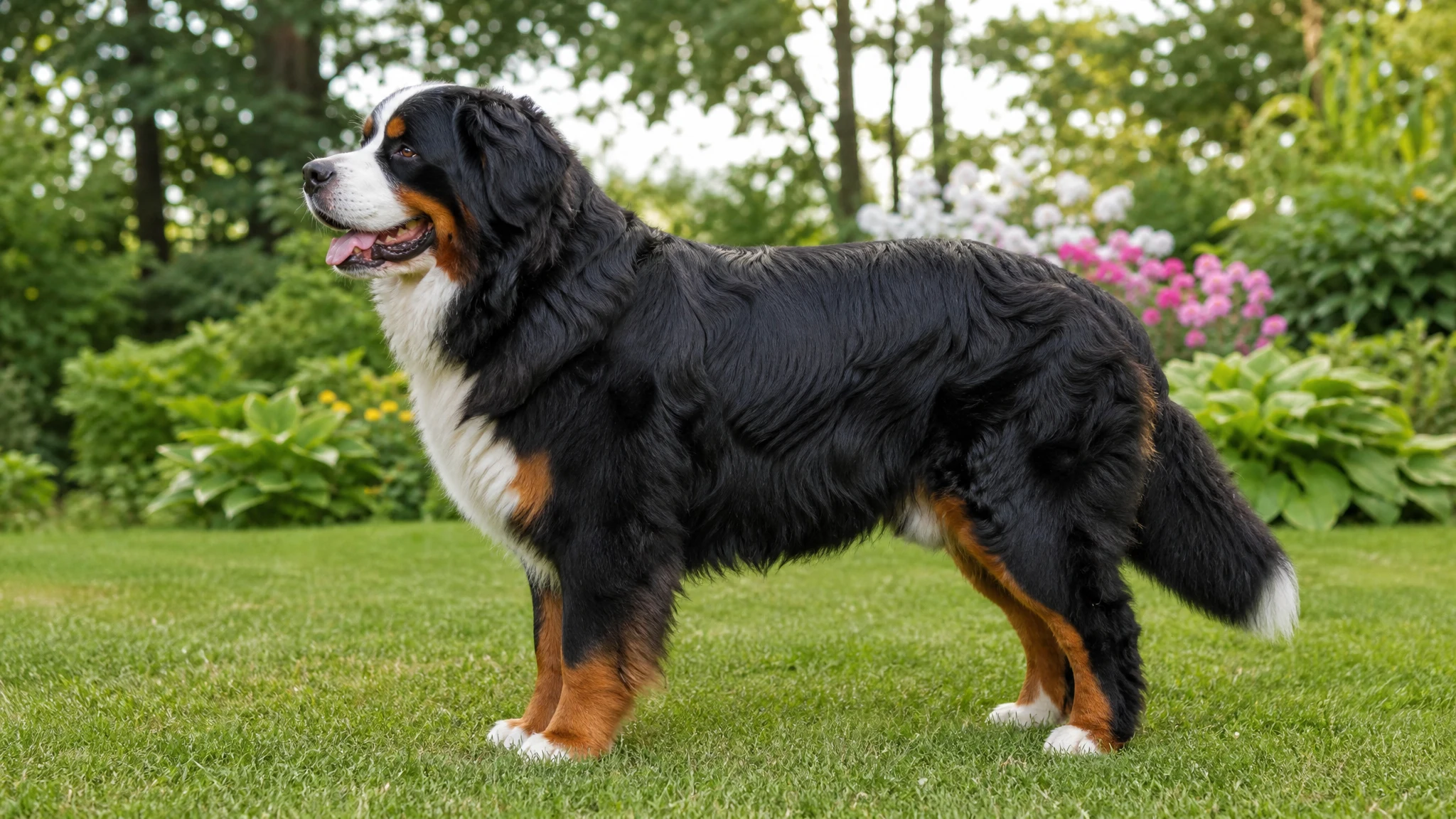
A Golden Mountain Dog is the name commonly used for a golden retriever Bernese Mountain Dog mix. It is a crossbreed, not a recognized breed with its own written standard. That matters, because no one can tell you exactly how big, how long-lived or how healthy a particular puppy will be.
This guide walks through how to plan for one of these dogs, with a focus on food. It is a how-to: what you need, the steps in order, the mistakes to skip and what to expect. It does not cover every part of owning a mixed-breed dog.
What we know, and what we do not
PetMD lists the Bernese Mountain Dog as a large breed, with adults at 70 to 115 pounds. Wikipedia gives males as 80 to 120 pounds and females as 75 to 100 pounds. A mix can land anywhere near or between its parents' sizes, and puppies in one litter can differ.
Lifespan is also uncertain. PetMD gives 7 to 10 years for the Bernese. The Bernese Mountain Dog Club of America says that 7 to 8 years is too short a figure and that some Berners reach their teens. For the golden retriever side, check the Golden Retriever Club of America or the breeder's records. We do not have a sourced number to give you here.
Health is the same story. PetMD says Bernese Mountain Dogs are prone to several cancers, notably histiocytic sarcoma. Wikipedia reports elbow dysplasia studies ranging from 13.91% to 26%. Whether a mixed puppy shares those risks is not something we can promise. Ask the breeder what health testing both parents had.
Materials you need
- The breeder's or rescue's records on both parents, including adult weights and health test results.
- A kitchen scale or a standard measuring cup, so you can portion food the same way every day.
- A slow feeder bowl and a floor-level bowl stand-in (a plain bowl on the floor works).
- The bag or can of the food you are considering, so you can read the label in full.
- A veterinarian you can ask about your individual dog.
- A notebook for weight, meals and body condition.
Step-by-step: planning your Golden Mountain Dog's food
Step 1: Treat the puppy as a large-breed puppy
Because one parent is a Bernese, the adult size could easily pass 70 pounds. PetMD advises feeding puppies of large and giant breeds an AAFCO-compliant food designed for them, to support steady growth. It also suggests up to four meals a day for puppies.
If the parents' adult weights are well below 70 pounds, your vet can help you decide how closely to follow large-breed guidance.
Step 2: Find the right wording on the label
Whole Dog Journal explains that foods for growth or all life stages carry one of two kinds of statement. One says the food is formulated for growth "including growth of large-size dogs (70 pounds or more as an adult)." The other says "except for" growth of large-size dogs, which means it is not suitable for large-breed puppies.
Look for the "including" wording. If the label does not make it clear, ask the brand. Do not guess.
Step 3: Compare labels, not slogans
We compared label data published by the brands. We did not run feeding trials or taste tests, and we have not fed these foods to dogs. The table below shows what each brand's own page states for a large-breed puppy food. None of these is made for Bernese or Golden Mountain Dogs specifically. We found no Bernese-specific formula.
| Food | Adequacy statement (as published) | First ingredients | Calories |
|---|---|---|---|
| Hill's Science Diet Puppy Large Breed Chicken & Brown Rice (dry) | Feeding tests substantiate complete and balanced nutrition for growing puppies | Chicken, brown rice, whole grain oats, chicken meal, cracked pearled barley | 387 kcal per cup |
| Royal Canin Size Health Nutrition Large Puppy (dry) | Meets AAFCO profiles for growth, including growth of large-size dogs; for adult weights of 56 to 100 pounds | Chicken by-product meal, corn, wheat, chicken fat, wheat gluten | 349 kcal per cup |
| Victor Hi-Pro Plus Large Breed Puppy (dry) | AAFCO profiles for All Life Stages | Chicken, chicken meal, brown rice, whole grain millet, whole grain sorghum | 365 kcal per cup |
| Freshpet Multi-Protein Puppy Recipe (fresh) | Growth, including growth of large size dogs (70 lbs or more as an adult) | Chicken, eggs, beef, beef liver, green beans | 241 kcal per cup |
Some notes on reading it. Hill's publishes dry-matter averages rather than guaranteed minimums, so its protein and fat figures are not directly comparable to the others. Royal Canin lists 28% protein and 14% fat as minimums, and Victor lists 30% protein and 14% fat. Freshpet lists 16% protein and 10% fat, but it is a fresh food with a high moisture content, so those numbers cannot be compared with dry food without converting them.
Victor's page, as we read it, shows the "All Life Stages" statement without the large-size dogs clause. Ask Victor whether the food is meant for large-breed puppies before you rely on it. You can find each product on its brand page: Hill's, Royal Canin, Victor and Freshpet.
Step 4: Use the label's feeding guide as a starting point
Every feeding chart is a starting estimate. Hill's says to adjust amounts as necessary to maintain optimal weight, and to ask your veterinarian if you are unsure. Royal Canin offers a feeding calculator on its page. Victor says that after age one you should feed to maintain good body condition, using the chart as a guide.
Weigh or measure every meal. Check your dog's body condition every couple of weeks and adjust with your vet's guidance.
Step 5: Set up meals to lower bloat risk
PetMD says deep-chested dogs, dogs fed from raised bowls and dogs fed once a day have a higher risk of gastric dilatation-volvulus, also called bloat. Its advice is two meals about 12 hours apart, a slow feeder and no elevated bowls. A young puppy will need more than two meals, so ask your vet how to move to that schedule as your dog grows.
Bloat is an emergency. If your dog has a swollen belly, retches without producing anything or seems distressed, call a veterinarian right away.
Step 6: Plan the move to adult food
We could not find a sourced age at which Bernese or Golden Mountain Dogs count as adults, so ask your vet and your breeder. When the time comes, the same label rules apply. For example, Royal Canin's Large Adult and Hill's Adult Large Breed both list adequacy statements for adult maintenance. Switch slowly and watch stools and appetite.
For more on the parent breed's needs, see our guide to Bernese Mountain Dog nutrition and the diet factors that matter.
Tips
- Keep your dog lean. PetMD lists a lean body as part of managing hip dysplasia in Bernese Mountain Dogs, alongside low-intensity exercise.
- Count treats and toppers in the daily calories.
- Write down the exact product name and the date you switch foods, so your vet can follow what changed.
- Ask the brand directly about anything the page does not say, such as kibble size.
Common mistakes to avoid
- Assuming a food made for "all life stages" suits a large-breed puppy. Read for the large-size dogs clause.
- Trusting a "Golden Mountain Dog" food label. We found no formula made for this mix or for the Bernese.
- Free-feeding a puppy. It makes portions hard to track.
- Using a raised bowl or one big daily meal. PetMD flags both as linked to higher bloat risk.
- Adding supplements on your own. PetMD mentions omega-3s and joint supplements in hip dysplasia management, but amounts and products are a decision for your vet.
- Relying on grain-free or DCM headlines. The FDA's latest update on diets and canine dilated cardiomyopathy is dated 12/23/2022, and the agency says it does not plan further public updates until there is meaningful new scientific information. Ask your vet about your dog.
What to expect
A food that fits the label wording and your portioning may help your puppy grow at a steady pace, though no food can promise a particular outcome. No food prevents, treats or cures hip or elbow dysplasia, cancer, bloat or heart disease. Diet is one piece, and your veterinarian decides what is right for your individual dog.
Expect some uncertainty about adult size, coat and temperament until your dog matures. Good records, steady meals and regular vet visits are the most dependable tools you have.
Sources
- PetMD, Bernese Mountain Dog breed page
- Bernese Mountain Dog Club of America, health page
- Wikipedia, Bernese Mountain Dog
- Whole Dog Journal, nutritional adequacy statements
- FDA CVM, diets and canine dilated cardiomyopathy
- Hill's Pet Nutrition, Science Diet Puppy Large Breed
- Royal Canin, Size Health Nutrition Large Puppy
- Victor, Hi-Pro Plus Large Breed Puppy
- Freshpet, Multi-Protein Puppy Recipe