Is a 'Saint Bernese' a Real Breed? What It Actually Is
General nutrition information compiled from product labels and published sources, not veterinary advice. Your veterinarian is the right person to choose a diet for your dog, especially one with a health condition.
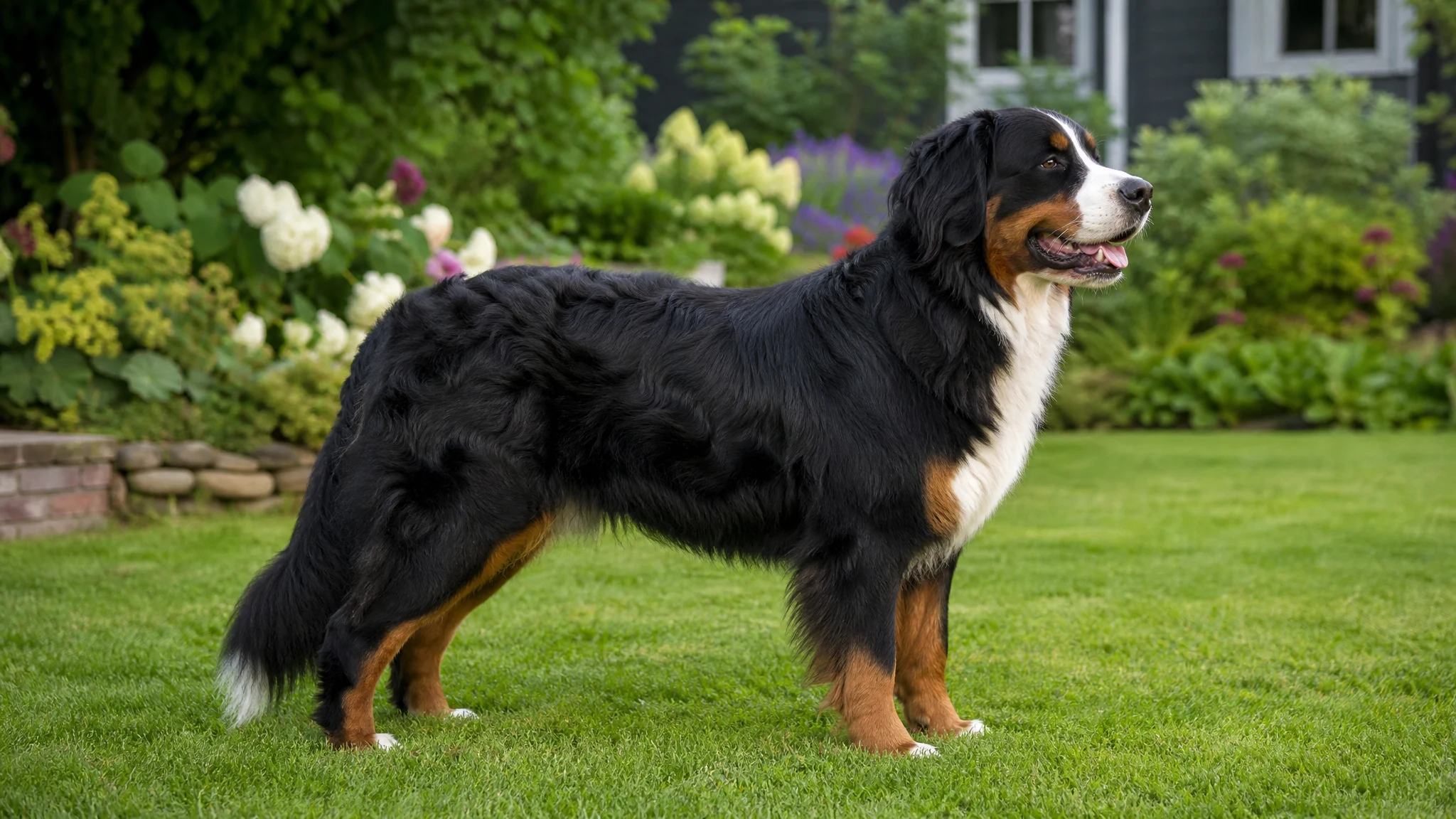
The term saint bernese mountain dog turns up in ads and rescue listings. It sounds like a breed, but the name is not the same as the Bernese Mountain Dog. PetMD gives the official breed name as Bernese Mountain Dog, and a 'Saint Bernese' is not that.
This guide shows you how to work out what the label means for a particular dog. It then covers how to feed that dog sensibly while you wait for answers.
The short answer
'Saint Bernese' is generally an informal name for a cross between a Bernese Mountain Dog and a Saint Bernard. Treat it as a description of possible parentage, not a recognized breed standard. I did not find the name listed as an official breed in the sources used for this article. If a seller or listing calls a dog a purebred 'Saint Bernese', ask for the registry details and check them with the registry itself.
A mixed-breed dog can still be a wonderful companion. The point is to know what you are actually getting, because size, health risks and feeding needs all depend on it.
What you need
- Any paperwork you have: the sale contract, registration papers, or rescue intake notes.
- Names of both parents, if the breeder or rescue can provide them.
- A kitchen or postal scale for weighing the dog or the food.
- The current food bag or can, so you can read the label together with your veterinarian.
- A notebook for weight, appetite and stool changes.
Step 1: Separate the name from the breed
Start by asking what the seller or rescue means by the name. 'Saint Bernese' can mean a first-generation cross, a later-generation mix, or simply a marketing label for a large fluffy dog. These are very different situations.
Write down exactly what you were told. Vague answers are a signal to slow down.
Step 2: Ask for parentage in writing
Ask who the sire and dam are, and what breed each is. A reliable source should be able to say. For a purebred Bernese parent, ask which registry holds the record, then contact that registry directly to confirm it.
The Bernese Mountain Dog Club of America (BMDCA) is the national breed club. Its health page at bmdca.org/health is a good place to learn what responsible Bernese breeders are expected to care about. I cannot say what any individual breeder has or has not done. Check with the club or registry.
Step 3: Do not assume a size
PetMD lists Bernese adults at roughly 70 to 115 lb. Wikipedia gives males 80 to 120 lb and females 75 to 100 lb. A mixed dog may land inside or outside those ranges, and the weights of the Saint Bernard side are not covered here, so I will not guess.
Instead, ask your veterinarian to estimate an adult weight range from the puppy's growth and the known parents. For feeding purposes, PetMD classes the Bernese as a large breed. Treat a 'Saint Bernese' as a large-breed dog until a veterinarian tells you otherwise.
Step 4: Choose the right life-stage label
For a puppy, the wording on the bag matters more than the front-of-bag marketing. Whole Dog Journal explains that foods for growth or all life stages carry one of two kinds of statements:
- 'Including growth of large-size dogs (70 pounds or more as an adult)' means the food is suitable for large-breed puppies.
- 'Except for growth of large-size dogs' means it is not.
PetMD advises feeding puppies an AAFCO-compliant food designed for giant or large breeds to support steady growth, up to four meals a day. If your puppy could reach 70 lb or more, look for the 'including' wording.
Label comparison
Here is how we compared the foods below: we compared published label data only. We did not run feeding trials or taste tests, and we are not ranking them. Hill's pages publish dry-matter averages rather than guaranteed minimums, so those figures are not directly comparable to the others.
| Food | Form | Growth statement on the page | Calories |
|---|---|---|---|
| Hill's Science Diet Puppy Large Breed Chicken & Brown Rice | Dry | Complete and balanced for growing puppies (feeding tests) | 387 kcal/cup |
| Royal Canin Size Health Nutrition Large Puppy | Dry | Growth, including growth of large-size dogs | 349 kcal/cup (calculated) |
| Freshpet Multi-Protein Puppy Recipe | Fresh | Growth including large size dogs (70 lbs or more as an adult) | 241 kcal/cup (calculated) |
Victor's Hi-Pro Plus Large Breed Puppy carries an all life stages statement. The 'large size dogs' clause was not visible in the label data I reviewed, so check that wording on the Victor product page or with the brand before choosing it for a large-breed puppy.
Step 5: Set up meals to lower bloat risk
PetMD notes that deep-chested dogs, dogs fed from raised bowls and dogs fed once a day have a higher risk of gastric dilatation-volvulus (bloat). Its advice is two meals about 12 hours apart, a slow feeder, and no elevated bowls.
A Saint Bernese may or may not share a Bernese's build, so ask your veterinarian whether this applies to your dog. Bloat is an emergency. A veterinarian, not a food, decides how to manage it.
Step 6: Start with the label guide, then adjust
Use the feeding chart on the bag as a starting point only. Hill's says to adjust amounts as necessary to maintain optimal weight, and to ask your veterinarian if you are unsure. Royal Canin offers a feeding calculator on its product pages.
Weigh the dog every couple of weeks and write it down. Feel along the ribs. You should be able to feel them without pressing hard.
PetMD lists keeping a lean body as part of managing hip dysplasia in Bernese dogs. That is a reason to watch weight, not a promise that any food will change a joint outcome.
Step 7: Plan the health conversation
PetMD says Bernese dogs are prone to several cancers, notably histiocytic sarcoma. Wikipedia reports elbow dysplasia studies ranging from 13.91% to 26%. Neither source says a diet changes those risks, and a mixed dog's risks may differ. Ask your veterinarian which screenings make sense for your dog.
On lifespan, PetMD gives 7 to 10 years for Bernese. The BMDCA says that 7 to 8 years is too short and that some reach their teens. Sources differ, so treat any number as a range.
For the wider picture on feeding this type of dog, see Bernese Mountain Dog nutrition and the diet factors that matter.
Tips
- Ask your veterinarian before changing foods, and switch gradually over several days.
- Keep a copy of the label wording you chose, so you can compare it later.
- If a food seems to disagree with your dog, note the symptoms and talk to your veterinarian rather than changing foods repeatedly.
- For food questions about a specific recipe, contact the brand directly.
Common mistakes
- Paying extra for a name. A label like 'Saint Bernese' is not proof of anything. Ask for parentage records.
- Feeding an adult food to a large puppy. Read the growth statement, not the front of the bag.
- Feeding once a day. PetMD links this to higher bloat risk in susceptible dogs.
- Using raised bowls. PetMD advises against them.
- Following the chart blindly. The chart is a starting point, and the dog's body condition is the check.
- Chasing a diagnosis with food. Diet does not prevent, treat or cure cancer, hip dysplasia or bloat. Prescription diets are something only a veterinarian prescribes.
- Worrying about grain-free marketing. The FDA has investigated a possible link between certain diets and canine dilated cardiomyopathy. Its latest update is dated 12/23/2022, and it does not plan further public updates until there is meaningful new scientific information. Ask your veterinarian what applies to your dog.
What to expect
Following these steps may help you get a clearer picture of your dog's background and may make food choices easier to explain to your veterinarian. A steady, label-matched diet and a lean body condition can support healthy growth and overall wellbeing, though results vary by dog and nothing here is guaranteed.
You may still not get a complete answer about parentage. That is fine. Feed to the dog in front of you: size, age, body condition and veterinary advice.