Is a Bernese Mountain Dog Australian Shepherd Mix Right for You?
General nutrition information compiled from product labels and published sources, not veterinary advice. Your veterinarian is the right person to choose a diet for your dog, especially one with a health condition.
A Bernese Mountain Dog Australian Shepherd mix sounds like the best of two worlds. But a mixed-breed puppy does not get an even blend of its parents. Size, coat, energy and health can lean toward either side.
This guide walks you through the decision in steps. It also covers how to plan feeding, because food is where a large-breed parent changes your choices the most.
What You Need Before You Start
- A notepad or phone note for questions and answers.
- The names of both parent breeds' clubs, so you can check their health pages.
- Contact details for a local veterinarian you trust.
- An honest list of your daily routine, space and budget.
- Time to read food labels, not just front-of-bag claims.
Step 1: Understand What a Mix Means
A first-generation mix can take after either parent, or land somewhere between. Two puppies from the same litter may end up with different sizes and coats. No one can promise which traits your dog will have.
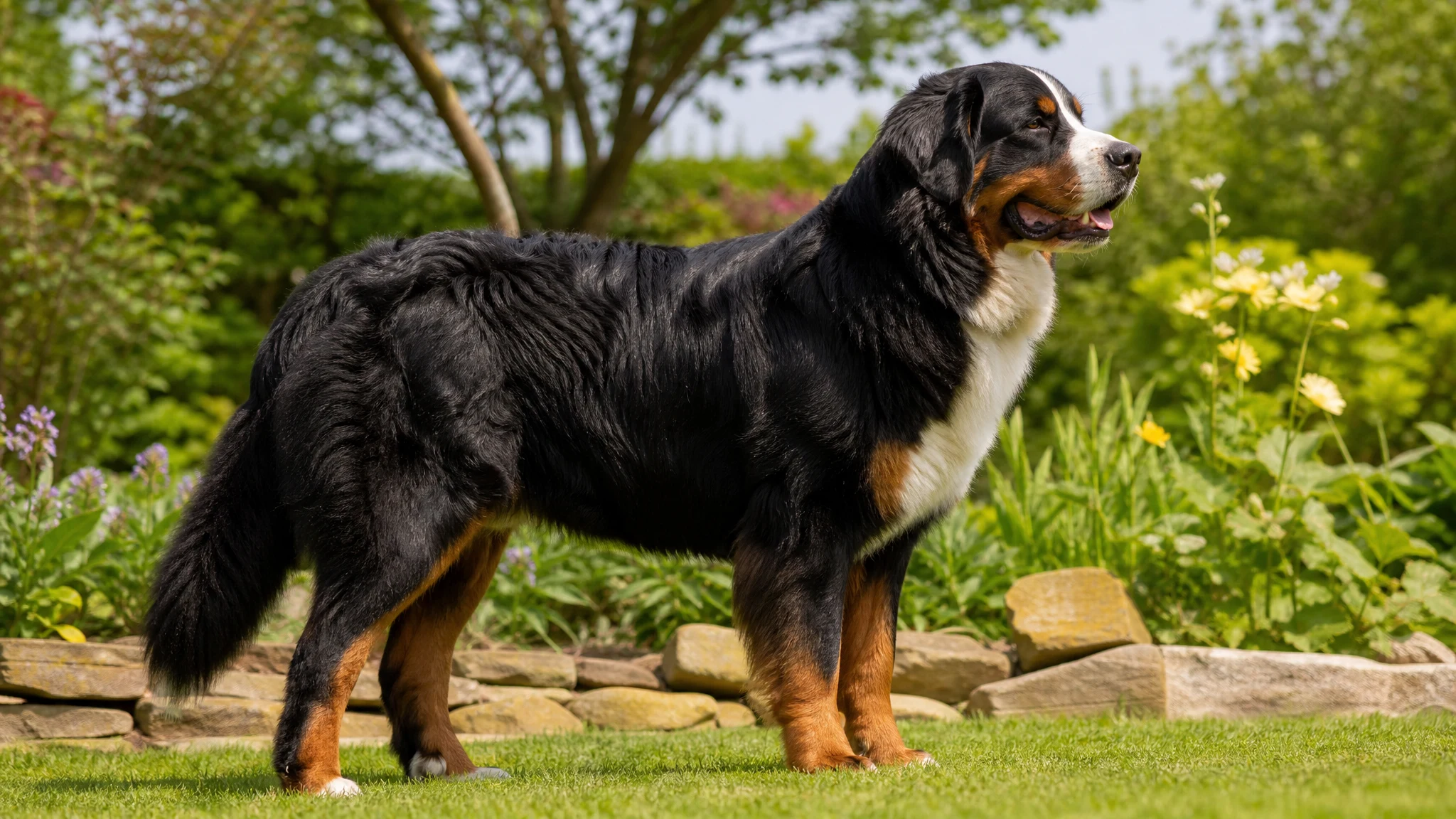
For the Bernese side, PetMD classes the Bernese Mountain Dog as a large breed and lists adult weight at 70 to 115 pounds. Wikipedia lists males at 80 to 120 pounds and females at 75 to 100 pounds. For the Australian Shepherd side, check the Australian Shepherd national breed club for its size and health information. We did not find a size figure for the mix itself, so ask the breeder or rescue what they know about the parents.
Step 2: Look Honestly at the Bernese Health Picture
Your dog may inherit health tendencies from either parent. Knowing the Bernese side helps you plan.
- Cancer. PetMD says the breed is prone to several cancers, notably histiocytic sarcoma.
- Lifespan. PetMD gives 7 to 10 years. The Bernese Mountain Dog Club of America says 7 to 8 years is too short a figure, and that some Berners live into their teens.
- Elbow dysplasia. Wikipedia reports studies with prevalence from 13.91% to 26%.
- Hip dysplasia. PetMD lists keeping a lean body and low-intensity exercise as part of management.
- Bloat. PetMD names deep-chested dogs as being at higher risk.
Ask any breeder which health screenings the parents had. If the answer is vague, treat that as information. For specific testing recommendations, check with the parent breed clubs and your veterinarian.
Step 3: Match the Dog to Your Daily Life
Write down how many hours a day someone is home, how much space you have, and how much exercise you can give every day. Then ask the breeder or rescue how active the parents are and how they behave with strangers and children. Parent behavior is the best clue you will get, though it is not a promise.
Plan for reward-based training from the first week. This is the approach supported by the American Veterinary Society of Animal Behavior (AVSAB). Treats, praise and play teach clearly without scaring the dog.
If you cannot describe a typical day that suits a large, active dog, pause here. That is a useful answer, not a failure.
Step 4: Plan the Puppy Food
This is where the Bernese parent matters most. PetMD advises feeding puppies an AAFCO-compliant food designed for giant or large breeds, to support steady growth, and up to four meals a day.
Because your puppy's adult size is uncertain, read the nutritional adequacy statement. Whole Dog Journal explains the wording:
- A food that says it covers "growth of large-size dogs (70 pounds or more as an adult)" is suitable for large-breed puppies.
- A food with "except for growth of large-size dogs" wording is not.
Berner adults weigh 70 pounds or more, so a mix with a Berner parent could well reach that range. Choosing the "including" wording keeps you covered either way.
Label data for a few large-breed puppy foods
We compared label data from the brands' own pages. We did not run feeding trials or taste tests, and none of these is made for a Bernese mix. We found no Bernese-specific formula. Treat this table as a way to learn what to read, not as a ranking.
| Food | Label detail | Calories |
|---|---|---|
| Hill's Science Diet Puppy Large Breed Chicken & Brown Rice | Dry. First five ingredients: chicken, brown rice, whole grain oats, chicken meal, cracked pearled barley. Protein is listed as a dry matter average of 26.7%, not a guaranteed minimum. | 387 kcal per cup |
| Royal Canin Size Health Nutrition Large Puppy | Dry. For adult weight 56 to 100 pounds. Minimum protein 28.0%, minimum fat 14.0%, maximum fiber 3.7%. The page says it meets AAFCO profiles for growth, including growth of large-size dogs. | 349 kcal per cup (calculated) |
| Victor Hi-Pro Plus Large Breed Puppy | Dry. Minimum protein 30%, minimum fat 14.0%, maximum fiber 6.0%. The AAFCO statement we saw said "All Life Stages"; confirm the large-size clause with the brand. | 365 kcal per cup |
| Freshpet Multi-Protein Puppy Recipe | Fresh. Statement covers growth including large size dogs (70 pounds or more as an adult). Minimum protein 16%, minimum fat 10%. | 241 kcal per cup (calculated) |
Note that calories per cup differ a lot, so the same cup measure gives different energy. Always use the feeding guide on the brand's page as a starting point, then adjust to your puppy's body condition. Hill's says to adjust amounts to maintain optimal weight and to ask your veterinarian if unsure.
Step 5: Set Up Safe Mealtimes
PetMD notes that dogs fed once a day and dogs fed from raised bowls are at higher risk of bloat, formally called gastric dilatation-volvulus. It advises two meals about 12 hours apart, a slow feeder and no elevated bowls. Puppies eat more often, so use your veterinarian's schedule while they are young.
No food prevents bloat, so ask your veterinarian what warning signs to watch for and what to do in an emergency.
Step 6: Plan for Adult and Senior Feeding
We did not find a source for the age at which Bernese dogs count as adults, so ask your veterinarian when to switch from puppy food. Move to a new food gradually over several days, mixing old and new.
For adults, the same label-reading habits apply. Large-breed adult formulas from Hill's and Royal Canin both state they meet AAFCO maintenance profiles. For a deeper look at what matters in the bowl, see our guide to Bernese Mountain Dog nutrition and the diet factors that matter.
On grain-free diets: the FDA has investigated a possible link between certain diets and canine dilated cardiomyopathy. Its latest update is dated 12/23/2022, and it does not plan further public updates until there is meaningful new scientific information. Ask your veterinarian whether this applies to your dog.
Step 7: Keep the Weight Lean
PetMD lists a lean body as part of hip dysplasia management. Check your dog's waist and ribs regularly, measure food rather than guessing, and count treats. If your dog gains or loses weight, ask your veterinarian before changing the diet.
Diet supports general health but does not treat joint problems. Joint supplements are a decision for your veterinarian, so do not start them on your own.
Tips and Common Mistakes
- Assuming the mix will be healthier. A mix can inherit problems from either side. Ask for health records instead.
- Guessing adult size. Pick puppy food for a large breed until your veterinarian says otherwise.
- Judging by the front of the bag. Read the adequacy statement, the ingredient list and the calories.
- Feeding one big meal. Split meals, as PetMD advises.
- Switching foods suddenly. Change over gradually.
- Using harsh training tools. Stick to reward-based methods.
- Skipping the vet conversation. A veterinarian decides what suits your individual dog.
What Results to Expect
If you follow these steps, you may end up with a clearer picture of whether this mix fits your home. A large-breed puppy food, measured meals and regular weight checks can support steady growth and a healthy body condition, though no plan guarantees a particular outcome. Your dog's size, coat, energy and health may differ from what you pictured.
If after Step 3 the match still feels right, talk with the breeder or rescue and your veterinarian before you commit.
Sources
- PetMD, Bernese Mountain Dog breed page
- Bernese Mountain Dog Club of America, health page
- Wikipedia, Bernese Mountain Dog
- Whole Dog Journal, nutritional adequacy statements
- FDA Center for Veterinary Medicine, diets and canine dilated cardiomyopathy
- Hill's Pet, Science Diet Puppy Large Breed
- Royal Canin, Large Puppy
- Victor, Hi-Pro Plus Large Breed Puppy
- Freshpet, Multi-Protein Puppy Recipe