How Big Is a Bernese Mountain Dog Really? Size Compared to a Person
General nutrition information compiled from product labels and published sources, not veterinary advice. Your veterinarian is the right person to choose a diet for your dog, especially one with a health condition.
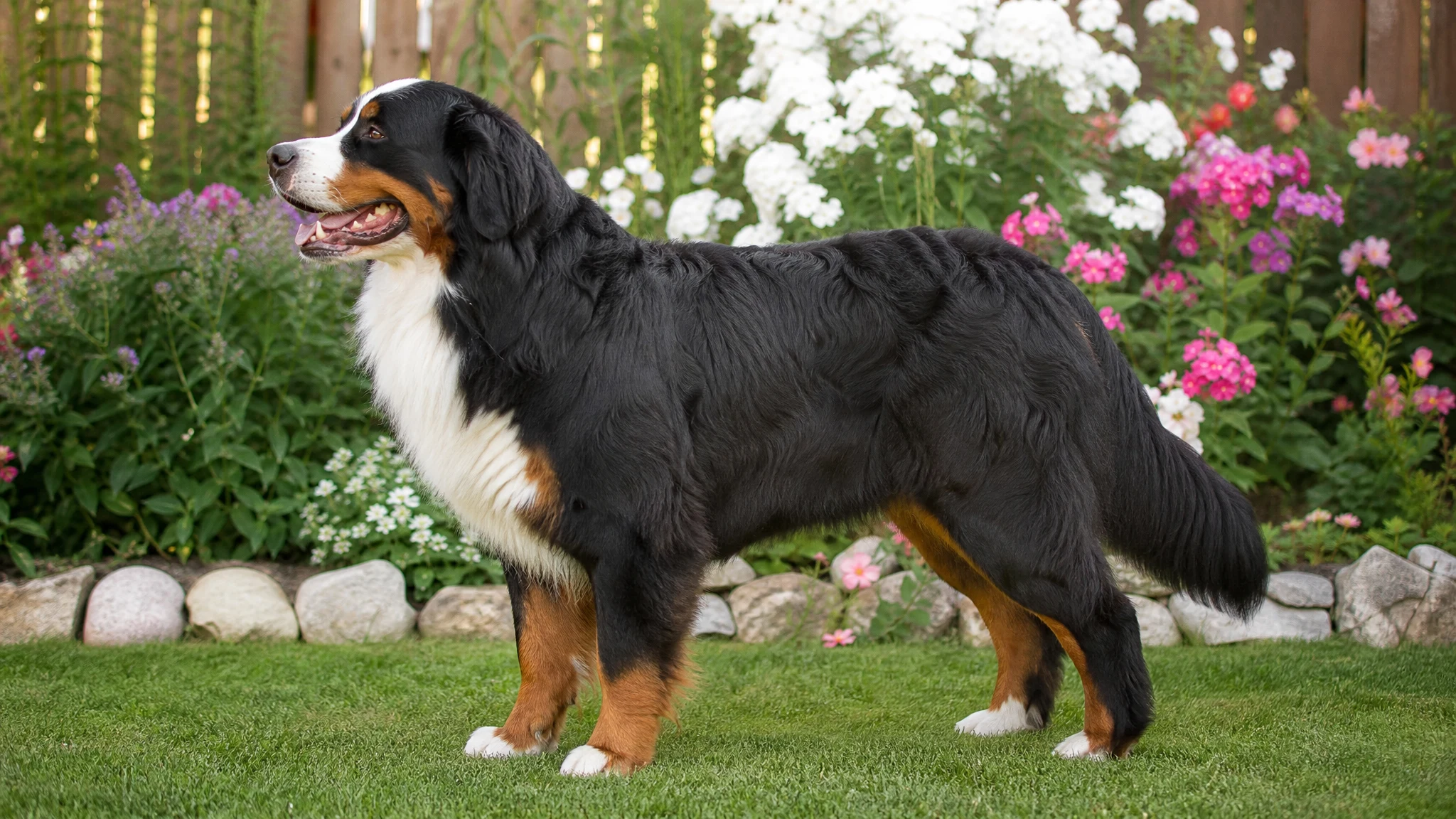
Photos can make a Bernese Mountain Dog look like a fluffy medium-sized dog. In person, many people are surprised. This is a large breed, and a Bernese Mountain Dog next to a human often looks like a small adult's equal in weight and a child's equal in reach.
This guide shows you how to build an honest picture of the breed's size using a tape measure, a scale and published weight ranges. It also explains why size matters for feeding, and where the published sources disagree.
What you will need
- A bathroom scale
- A tape measure or a yardstick
- A notepad or phone for notes
- A wall or door frame with a flat surface
- A helper, if you are measuring a real dog
- A few small treats, if you are measuring a real dog
If you do not have a Bernese yet, you can still do steps 1 to 4 using yourself as the comparison. That is often the most useful part for people deciding whether the breed fits their home and car.
Step 1: Start with the published weight range
Begin with the numbers, and note who published them. PetMD's breed page lists adult Bernese Mountain Dogs at 70 to 115 pounds and places the breed in the large size category.
Wikipedia's breed entry, a secondary source, gives slightly different ranges: males at 80 to 120 pounds and females at 75 to 100 pounds. The sources do not match exactly, and that is normal. Breed ranges describe typical dogs, not every dog. For an individual dog, your veterinarian is the one to say what a healthy weight looks like.
Step 2: Weigh yourself and compare
Step on the scale and write down your weight. Then set it beside the 70 to 115 pound range. Depending on your build, an adult Bernese may weigh a large share of what you do, and some may weigh as much as a smaller adult.
This is the step that changes most people's expectations. A dog in that range is not a lap dog. It can pull on a leash with real force, and lifting one into a car or onto a grooming table is a serious task.
Step 3: Mark your own reference points on a wall
Height is where published breed pages are less consistent, and the sources used for this article do not give a shoulder height. For the official figures, check the breed standard from the American Kennel Club or the Bernese Mountain Dog Club of America.
Once you have the standard's shoulder height, you can make it real:
- Stand against the wall and have someone mark your hip, your waist and your knee.
- Measure the height of each mark from the floor.
- Compare the breed standard's shoulder height to your marks.
Many owners find a Bernese's back sits somewhere around their own hip or waist. Check this against your own body, because it depends on your height and on the individual dog.
Step 4: Think about length and reach, not just height
Berners are sturdy, long-bodied dogs with thick coats, so they take up more room than height alone suggests. Lay your tape measure on the floor and mark out the length of your car's cargo space, your sofa and your usual bed spot. Then compare these with the breed standard's body proportions.
Also think about reach. A large dog standing on its hind legs can reach counters and tables. Standing next to a person, a Bernese's head and chest often land near countertop height, which matters for food safety at home.
Step 5: If you have a real dog, measure it kindly
Only do this with a calm dog, using treats and short sessions. Reward-based handling keeps measuring pleasant, in line with the approach the American Veterinary Society of Animal Behavior supports. Never force a dog into position.
- Stand the dog with its back against a wall, feet square beneath it.
- Reward calm standing, then place a flat book across the top of the shoulders.
- Mark the wall under the book and measure from the floor.
- To weigh the dog, weigh yourself, then weigh yourself holding the dog if you can do so safely. Subtract your own weight. For a large dog, a veterinary clinic scale is easier and safer.
Write down the date and the number. Repeating this every few months shows how your dog is growing or holding steady.
Step 6: Connect size to feeding
Size is not just about how a dog looks next to you. It shapes how you feed. For puppies, PetMD advises food designed for giant or large breeds, with up to four meals a day, to support steady growth. On a label, the wording to look for is a statement that the food suits growth of large-size dogs (70 pounds or more as an adult). Wording such as "except for growth of large-size dogs" means the food is not intended for large-breed puppies. Bernese adults reach that 70 pound line, so the "including" wording is the one that matches.
Adult dogs are different. PetMD notes that deep-chested dogs, dogs fed from raised bowls and dogs fed once a day have a higher risk of bloat (gastric dilatation-volvulus). It suggests two meals about 12 hours apart, a slow feeder and no elevated bowls. That is general breed guidance, not a promise about any one dog, and your veterinarian can tailor it.
PetMD also lists keeping a lean body as part of managing hip dysplasia, one of the joint concerns in large breeds. A food label's feeding guide is only a starting point. For a walk-through of portions, see our Bernese Mountain Dog feeding chart guide.
How we looked at product size labels
When we compared food labels, we compared published label data only. We did not run feeding trials or taste tests. As one example, Royal Canin's Size Health Nutrition Large Puppy formula lists an adult weight range of 56 to 100 pounds on its page, which does not fully cover the 70 to 115 pound range PetMD gives for Berners. A label's size range is worth checking against your dog, and the brand or your veterinarian can help you decide. The product is described on Royal Canin's own page.
Tips and common mistakes
- Do not trust photos alone. Camera angle and a thick coat change how big a dog looks.
- Do not use one number as a target. Published ranges differ by source. A healthy dog is judged by body condition, and your veterinarian can show you how to check it.
- Do not forget the puppy stage. A puppy may look manageable, yet adult weight is the figure to plan around.
- Do not skip the car test. Measure your cargo space before bringing home a large breed.
- Do not confuse weight with condition. A heavier dog is not automatically a healthier one. PetMD recommends staying lean for joint health.
- Do not rely on one source for lifespan or health. PetMD gives 7 to 10 years, while the Bernese Mountain Dog Club of America says 7 to 8 years is too short and that some Berners reach their teens. PetMD also notes the breed is prone to several cancers, notably histiocytic sarcoma. Talk with your veterinarian about what that means for an individual dog.
What to expect
After these steps, you will likely have a clearer, more realistic picture of a Bernese Mountain Dog next to a human, based on your own body and your own home rather than a photo. Most people find the weight comparison the most surprising part.
You may also feel better prepared for practical choices such as food, bowls, vehicle space and leash handling. Results will vary with the dog and the person. Treat all published ranges as general guides, and confirm anything health-related with your veterinarian.