Bernese Mountain Dog Puppies Near You: What a Responsible Breeder Will Ask
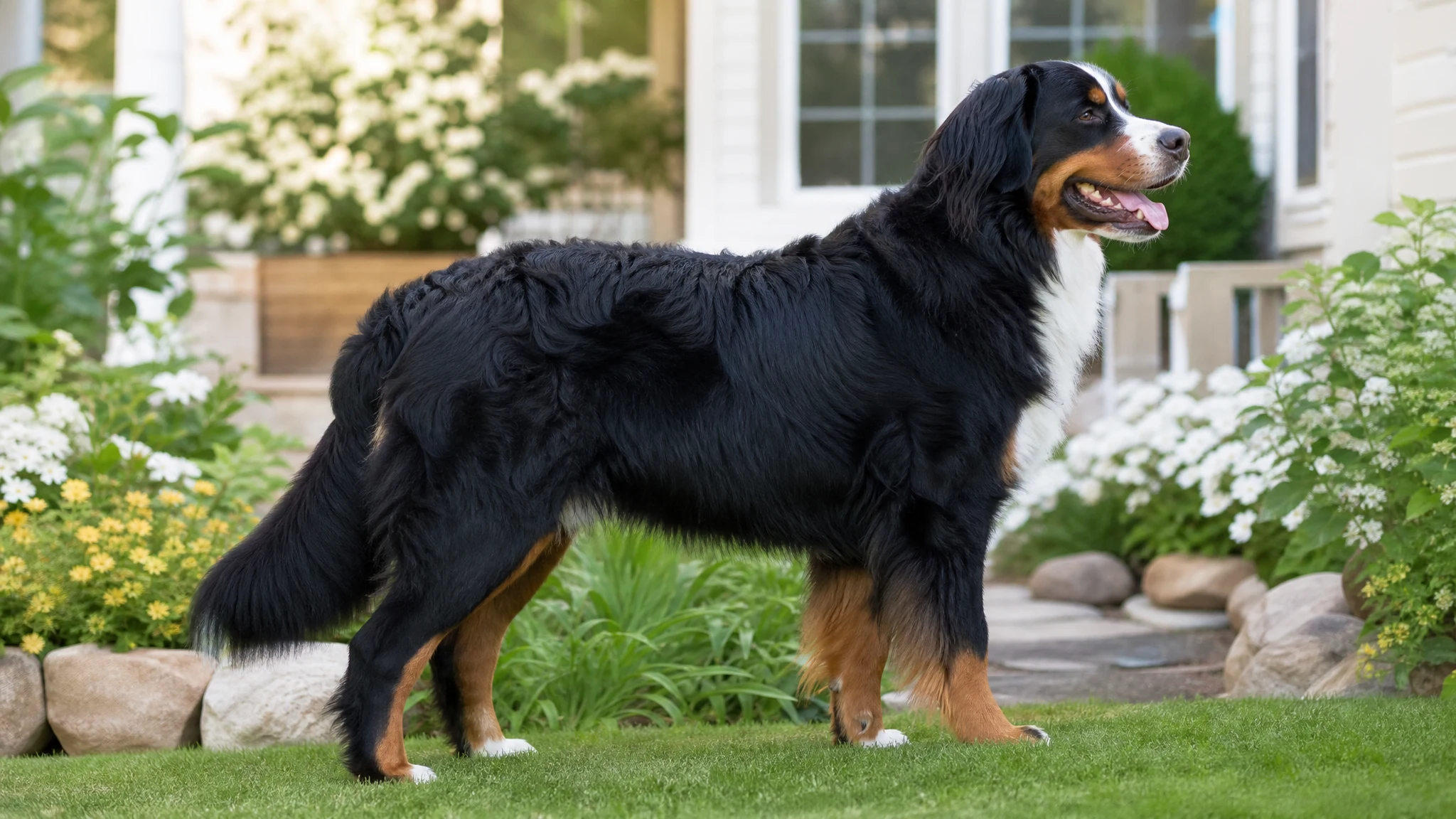
General nutrition information compiled from product labels and published sources, not veterinary advice. Your veterinarian is the right person to choose a diet for your dog, especially one with a health condition.
Finding Bernese Mountain Dog puppies in your area is the easy part. Finding a breeder who cares where each puppy goes takes more care. A good breeder usually interviews you as closely as you interview them.
This guide walks you through preparing for that conversation. You will learn what questions to expect, how to answer them honestly, and what to ask in return. It also covers feeding, because a breeder will often want to know your plan for it.
What You Will Need
- A short written summary of your home, yard, fencing and daily schedule
- The name and contact details of your veterinary clinic, if you already have one
- A list of any past pets and what happened to them
- A rough monthly budget for food, veterinary care, grooming and training
- A notebook for the breeder's answers to your own questions
- Time. A good breeder may have a waiting list, and the wait is often normal
Step 1: Know the Dog You Are Asking For
Breeders will expect you to understand the breed before you apply. PetMD lists the Bernese Mountain Dog as a large breed. It gives an adult weight of 70 to 115 pounds. Wikipedia lists males at 80 to 120 pounds and females at 75 to 100 pounds. The sources differ a little, so treat these as ranges.
Lifespan is a common topic. PetMD gives 7 to 10 years. The Bernese Mountain Dog Club of America (BMDCA) says on its health page that 7 to 8 years is too short and that some Berners reach their teens. Reading the club's own health page before you call shows the breeder you did your homework.
Step 2: Expect Questions About Your Home and Routine
Most responsible breeders ask about the same things. You can prepare an honest answer to each one.
- Where will the dog live? Describe your house, yard and fencing. Mention how much time the dog will spend indoors with the family.
- Who is home during the day? Be straightforward about work hours. A breeder would rather hear the truth than a polished answer.
- Who else lives with you? Mention children, other dogs and cats.
- What experience do you have with large dogs? Say so plainly if this is your first one.
- How will you train the puppy? The American Veterinary Society of Animal Behavior (AVSAB) supports reward-based training. A good answer describes treats, praise and patient repetition. Avoid saying you plan to use dominance methods or harsh collars.
- What happens if you can no longer keep the dog? Many breeders want to be the first call, not a shelter. Ask what their policy is for taking a dog back.
Step 3: Expect Questions About Money and Care
Large dogs cost more to feed and treat. A breeder may ask whether you have planned for that. I cannot give you a price for a puppy or for veterinary care, so ask the breeder and your local clinic for current figures.
Be ready to discuss veterinary care in general terms. Berners are prone to several cancers, notably histiocytic sarcoma, according to PetMD. PetMD also describes high rates of joint problems. For elbow dysplasia, Wikipedia cites studies reporting 13.91% to 26%. Neither source is a promise about any single puppy. Their point is that a breeder will want an owner who can handle health costs and decisions calmly.
Step 4: Ask Your Own Questions
The conversation should go both ways. Write your questions down before the call or visit.
- Which health screenings are done on the parents, and can you see the results? Ask what the breeder relies on, and check the BMDCA health page for what the club says about breed health.
- How long have you worked with this breed, and are you a member of the BMDCA or a local Bernese club? Confirm membership with the club itself.
- Can I meet the mother, and see where the puppies are raised?
- What cancer or longevity history do you know in the lines?
- What does the sales contract require of me, and of you?
- What are the puppies eating now, and how are they weaned?
Write the answers down. If a breeder avoids a question, that tells you something too.
Step 5: Plan the Puppy's Food Before Pickup
A breeder will usually tell you what the litter is eating and may suggest a transition plan. Ask for it in writing. Switching foods suddenly is a common reason for upset stomachs, so ask how they recommend changing over.
On growth, PetMD advises feeding puppies an AAFCO-compliant food designed for giant or large breeds, to support steady growth, with up to four meals a day. When you read a label, Whole Dog Journal explains the wording to look for: a statement that the food is formulated for growth "including growth of large-size dogs (70 pounds or more as an adult)". A food with "except for growth of large-size dogs" wording is not meant for large-breed puppies. Bernese adults weigh 70 pounds or more, so the "including" wording is the one that fits.
For the wider picture, see our guide to Bernese Mountain Dog nutrition and the diet factors that matter.
We compared label data from manufacturer pages. We did not run feeding trials or taste tests. Examples of foods with large-breed puppy label wording include Hill's Science Diet Puppy Large Breed Chicken & Brown Rice Recipe, Royal Canin Size Health Nutrition Large Puppy, and Freshpet Multi-Protein Puppy Recipe, whose label says it is formulated for growth including large size dogs. Check each brand's own page for the current label, and ask your veterinarian which food suits your puppy. Any food amounts on a package are starting points, and your veterinarian helps you adjust them.
Feeding routine matters for this breed too. PetMD notes that deep-chested dogs, dogs fed once a day and dogs fed from raised bowls are at higher risk of bloat (gastric dilatation-volvulus). It advises two meals about 12 hours apart, a slow feeder and no elevated bowls for adults. Ask your veterinarian how to apply that to a growing puppy.
Tips for a Smoother Process
- Answer honestly, even when the honest answer is "I am not sure yet."
- Ask for a visit before you commit to anything.
- Keep notes from each breeder so you can compare them side by side.
- Ask what you will receive at pickup, such as paperwork and a feeding plan.
- Be patient with waiting lists. A quick "yes" with no questions deserves more caution than a slow one.
Common Mistakes to Avoid
- Paying a deposit before you have asked questions. Get answers and read the contract first.
- Treating a health claim as a guarantee. No breeder can promise a puppy will never develop a health problem.
- Skipping the parents. Temperament and condition of the adult dogs are useful information.
- Choosing food by marketing. Read the adequacy statement and ingredient list instead of the front of the bag.
- Assuming a food will protect against a condition. Diet is one part of care. Your veterinarian decides what is right for an individual dog.
- Expecting a breed-specific formula. In the brand pages we reviewed, we found no Bernese-specific formula. Large-breed formulas are what you will see.
What to Expect Afterward
If you prepare well, the process often feels more like a conversation than an interrogation. You may come away with a clearer picture of the breeder's practices and of your own readiness. It may also lead to a spot on a waiting list. Some applicants find they are better suited to an adult dog or a different breed, and a thoughtful breeder may say so. That is a useful outcome, not a failure.
Whichever breeder you choose, keep your veterinarian involved from the first week. They can review the puppy's records and discuss feeding and growth with you.
Sources
- PetMD, Bernese Mountain Dog breed page
- Bernese Mountain Dog Club of America, health page
- Wikipedia, Bernese Mountain Dog
- Whole Dog Journal, In the Fine Print: Nutritional Adequacy Statements
- Hill's Pet, Science Diet Puppy Large Breed
- Royal Canin, Size Health Nutrition Large Puppy
- Freshpet, Multi-Protein Puppy Recipe With Green Beans & Carrots