Bernedoodle Generations Explained: F1, F1B and Multigen
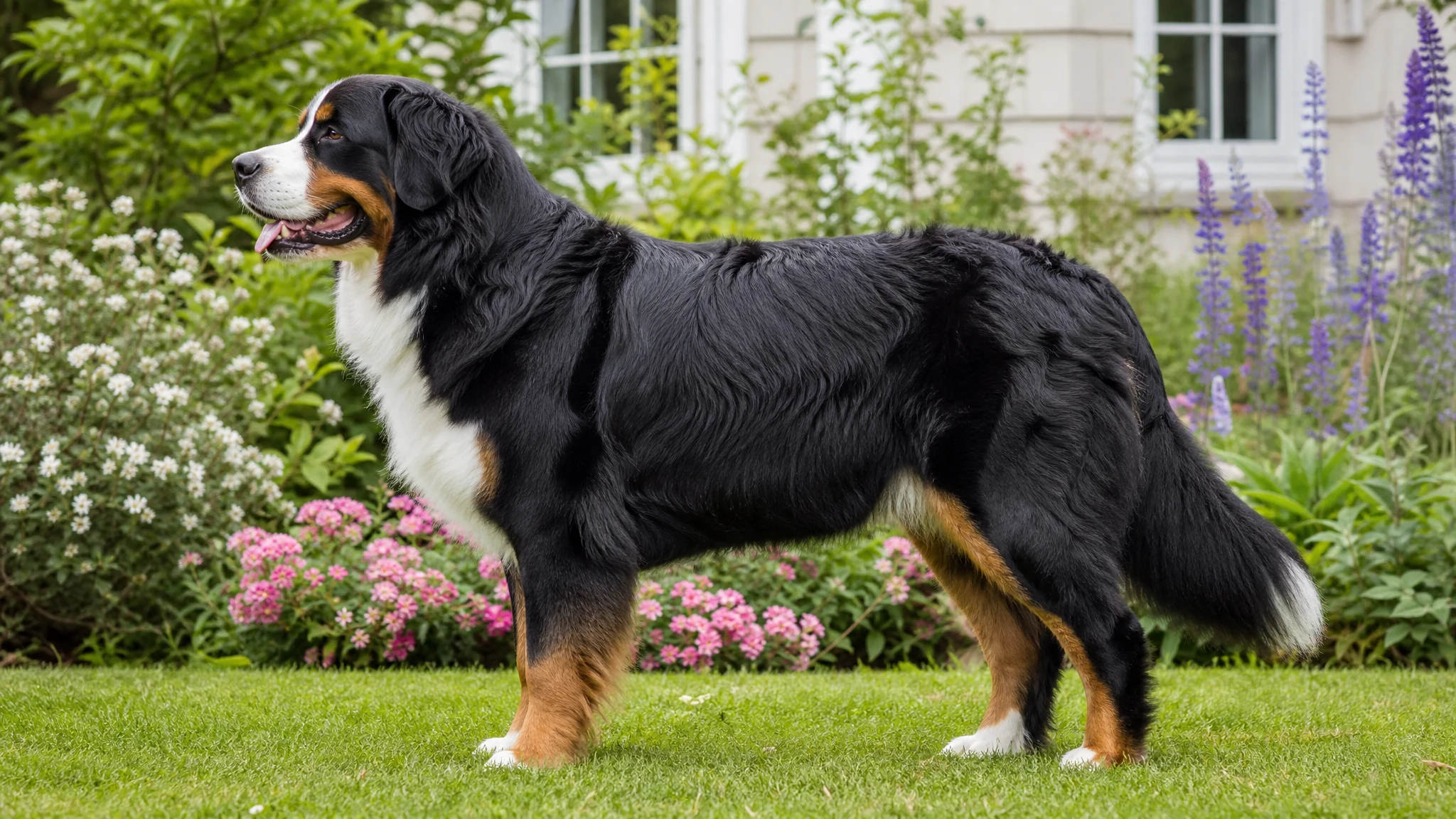
General nutrition information compiled from product labels and published sources, not veterinary advice. Your veterinarian is the right person to choose a diet for your dog, especially one with a health condition.
A Bernese Mountain Dog mixed with Poodle is usually called a Bernedoodle. Breeders label these puppies with codes like F1, F1B and multigen. The codes look technical, but they only describe which dogs were bred together. This guide shows you how to read them, step by step, and what to ask before you trust them.
One caution first. A generation label describes parentage on paper. It does not promise a coat type, an adult size, a temperament or a health outcome. Puppies in the same litter can differ a lot.
What you need before you start
- The breeder's written description of the puppy's parents, including breed or generation for both the sire and the dam.
- Any pedigree or registration paperwork the breeder offers for the parents.
- Health testing records for both parents, in the breeder's own words and with the name of whoever did the testing.
- A pen and paper to write out the family tree, so you can check the label against it.
- A list of questions about size, coat and health that you want answered in writing.
Step 1: Know the two breeds being mixed
The Bernese Mountain Dog side is a large breed. PetMD lists adult weight at 70 to 115 lb, while Wikipedia lists males at 80 to 120 lb and females at 75 to 100 lb. The sources differ a little, so treat these as ranges, not targets.
For Poodle traits, including the size varieties and coat, check with the breeder and with a Poodle breed club. We do not give Poodle figures here because they vary by variety.
Keep the Bernese side in mind because it affects health questions later. PetMD notes the breed is prone to several cancers, notably histiocytic sarcoma. The Bernese Mountain Dog Club of America (BMDCA) health page is a good place to read about the breed's health concerns directly.
Step 2: Read an F1 label
F1 means first generation. One parent is a purebred Bernese Mountain Dog and the other is a purebred Poodle. On paper, the puppy is half of each breed.
"On paper" matters. Genes do not split in neat halves. One puppy may look mostly Bernese and a littermate may look mostly Poodle.
Write it down like this: Bernese x Poodle = F1.
Step 3: Read an F1B label
The "B" stands for backcross. An F1B puppy comes from breeding an F1 Bernedoodle back to one of the original breeds. Most often that is a Poodle.
The arithmetic is simple. If the F1 parent is half Bernese and half Poodle, and the other parent is a purebred Poodle, the puppy is about 25 percent Bernese and 75 percent Poodle on paper. Some breeders backcross to a Bernese instead, which flips those numbers. Always ask which breed was used.
Write it down like this: F1 Bernedoodle x Poodle = F1B.
Step 4: Read an F2 label
F2 means second generation. Both parents are F1 Bernedoodles. On paper the puppy is still about half and half, but the parents each carry mixed genes, so the litter can vary widely.
Write it down like this: F1 x F1 = F2.
Step 5: Read a multigen label
Multigen is short for multigenerational. It generally means the puppy's parents are Bernedoodles that come from several generations of Bernedoodle breeding, not a fresh cross of two purebreds.
There is no single rule for how a breeder uses this word. Some use it loosely. Ask for the parents' own generation labels and how many generations back the breeder has tracked. The breeder should be able to name them.
Step 6: Compare the labels side by side
| Label | Parents | Approximate breed mix on paper |
|---|---|---|
| F1 | Bernese x Poodle | 50% Bernese, 50% Poodle |
| F1B (Poodle backcross) | F1 Bernedoodle x Poodle | 25% Bernese, 75% Poodle |
| F1B (Bernese backcross) | F1 Bernedoodle x Bernese | 75% Bernese, 25% Poodle |
| F2 | F1 x F1 | About 50% each, wide variation |
| Multigen | Later-generation Bernedoodles | Varies; ask the breeder |
These percentages are arithmetic, not predictions. A puppy's real mix of genes can land well away from the numbers.
Step 7: Ask the questions the label cannot answer
A generation tells you very little about health. Ask these instead:
- What health testing was done on each parent, and can you see the results?
- How old were the parents when they were tested?
- What do you know about cancer, joint problems and lifespan in the parents' families?
- What adult weight range have your past puppies reached?
Joint health is a fair thing to ask about. PetMD describes hip dysplasia as a Bernese concern. Wikipedia reports elbow dysplasia prevalence in Bernese studies between 13.91% and 26%. Because Wikipedia is a secondary source, treat that range as a reason to ask questions, not as a measure for your puppy.
Lifespan sources also disagree. PetMD gives 7 to 10 years for the breed. The BMDCA says 7 to 8 years is too short and that some Berners reach their teens. A mixed-breed puppy's lifespan can't be read from its generation label.
Step 8: Plan feeding for a large puppy
Whatever the generation, many Bernedoodles can end up large, so plan for a large-breed puppy until you know more. PetMD advises feeding puppies an AAFCO-compliant food designed for giant or large breeds to support steady growth, with up to four meals a day.
On the bag, Whole Dog Journal explains that AAFCO statements for growth foods come in two forms. Wording such as "including growth of large-size dogs (70 pounds or more as an adult)" means the food suits large-breed puppies. Wording with "except for growth of large-size dogs" means it does not. Bernese adults weigh 70 lb or more, so look for the "including" wording if your puppy may reach that size.
Bloat deserves a mention too. PetMD says deep-chested dogs, dogs fed from raised bowls and dogs fed once a day are at higher risk. It advises two meals about 12 hours apart, a slow feeder and no elevated bowls. Your veterinarian decides what suits an individual dog.
For a fuller look at feeding, see Bernese Mountain Dog nutrition and the diet factors that matter.
Tips for reading generation labels
- Ask for the labels of both parents, not only the puppy.
- Get the breeder's claims about coat and size in writing, then treat them as estimates.
- Meet the parents, or ask for recent photos and weights, if you can.
- Ask what the breeder means by "multigen" rather than assuming.
Common mistakes to avoid
- Treating a label as a guarantee. No generation reliably produces a particular coat, size or temperament.
- Assuming a mixed breed is automatically healthier. Check the parents' health records instead of relying on the cross.
- Skipping the size question. A puppy from a Bernese parent may grow large, so plan space and food for that.
- Feeding a general puppy food. Check the AAFCO wording for large-size growth as described above.
What to expect
If you follow these steps, you will probably understand what a breeder means by each label and be better able to spot vague answers. You may also feel more confident comparing litters.
The label will not tell you exactly how your puppy turns out. Coat, adult weight and health can still vary within a generation, so check with the breeder, a Bernese or Poodle breed club and your veterinarian.