Bernedoodle Coat Types: What a Bernese Mountain Dog Poodle Mix Looks Like
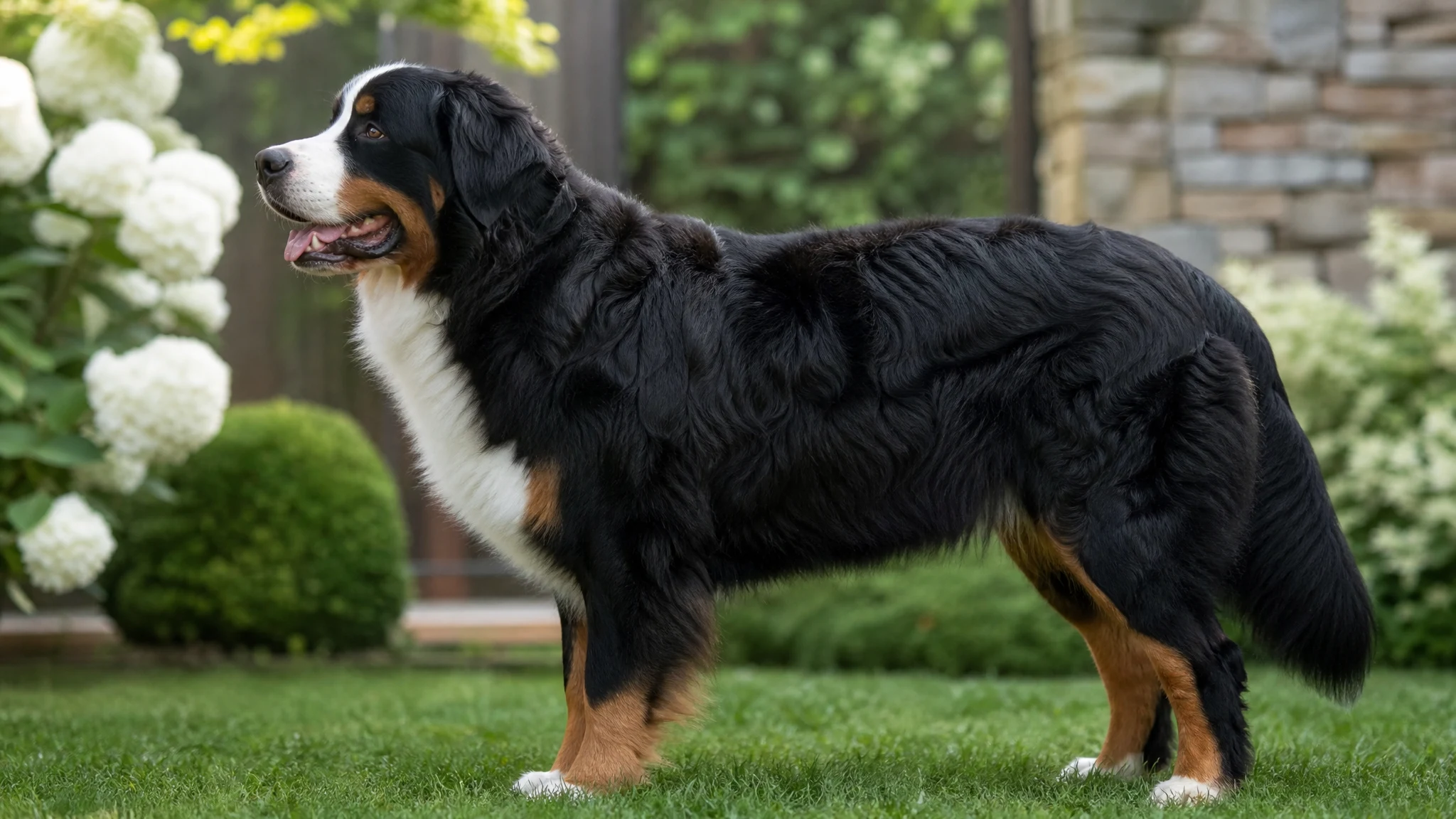
General nutrition information compiled from product labels and published sources, not veterinary advice. Your veterinarian is the right person to choose a diet for your dog, especially one with a health condition.
A Bernese Mountain Dog doodle is a mixed-breed dog with a Bernese Mountain Dog parent and a Poodle parent. Because it is a mix, no two puppies in a litter are guaranteed to look alike. This guide walks you through a careful way to work out what coat a puppy or young dog has, and what to ask before you decide anything.
One honest note up front. Breed clubs for the Bernese itself publish health and breed information. A mixed-breed doodle has no single standard that every breeder follows. So where coat details depend on the breeder or the individual dog, this article tells you what to ask rather than making up an answer.
What you need before you start
- Clear, well-lit photos of the puppy, its parents and any littermates, taken from the side and close up.
- The breeder's written information on both parents, including which breeds and generations are in the pedigree.
- Health testing records the breeder says they hold for the parent dogs.
- A notebook or phone note to record the coat at several ages.
- A comb and a soft brush, so you can feel how the coat behaves and tangles.
- Your veterinarian's contact details, for questions about skin, weight and diet.
Step 1: Learn what the Bernese parent contributes
Start with the part of the mix that is well documented. PetMD's breed page lists the Bernese Mountain Dog as a large breed, with adults weighing roughly 70 to 115 pounds. That tells you the doodle may be a big dog, though the Poodle parent's size changes the picture. Ask the breeder for the actual size of both parents rather than guessing.
Look at photos of the Bernese parent's coat and note what you see. A mix can resemble either parent or land somewhere in between, so photos of both parents are your best clue.
Step 2: Ask the breeder how the cross was made
Coat is influenced by which dogs were bred together. Ask the breeder to explain, in plain words:
- Were both parents purebred, or was one already a mix?
- What do the parents' coats look like, and can you see photos?
- What coat have earlier litters from this pairing grown up to have?
- Which coat features does the breeder say are not predictable?
A good breeder will answer without hype. Be wary of anyone who promises a particular coat or says a puppy will not shed. Coat promises are not something you can verify from a puppy photo.
Step 3: Record the puppy's coat at several ages
A puppy coat often looks different from the adult coat. Photograph your dog from the side and up close each month, in the same light, and write down what you notice:
- Texture: soft and fluffy, silky, or rough to the touch.
- Shape of the hair: flat, wavy or tightly curled.
- Length: short around the face and longer on the body, or even all over.
- Color pattern: whether the dog shows the Bernese tricolor pattern, a solid color, or a mix.
- Tangling: where hair mats first, such as behind the ears, under the collar or in the armpits.
These notes give you a picture of the real coat rather than a label. They are also useful to show a groomer or veterinarian.
Step 4: Do not rely on a coat name alone
You will see doodle coats described with labels such as straight, wavy or curly. These labels are informal. They are used by sellers and owners, and they are not a standard set by a Bernese Mountain Dog club. Treat them as a loose description of what the dog looks like, and check any claim about shedding or allergies with the breeder and your own doctor.
If anyone in your household has allergies, spend time with the dog and its parents before you commit. Do not assume a particular coat will suit you.
Step 5: Match your care routine to the coat you actually see
Once you know how your dog's coat behaves, plan your routine around it.
- Brush and comb to the skin, not just the top layer, so mats do not hide underneath.
- Check the hair behind the ears, under the collar and around the legs after every outdoor trip.
- Ask a groomer about the coat once you have a few months of notes to show them.
- Use gentle handling and treats to teach the dog to enjoy brushing. Reward-based training, in line with American Veterinary Society of Animal Behavior (AVSAB) guidance, makes grooming easier for a large dog.
Step 6: Plan feeding around size, not coat
Coat does not decide how much your dog should eat. Size, age, activity and body condition do. For a large Bernese-cross puppy, PetMD's Bernese Mountain Dog page advises food that meets AAFCO standards and is designed for giant or large breeds, to support steady growth, with up to four meals a day.
On the label, look for the wording "including growth of large-size dogs (70 pounds or more as an adult)." Food with "except for growth of large-size dogs" wording is not meant for large-breed puppies. If you do not know how big the adult doodle will be, ask your veterinarian which type of puppy food fits.
For starting amounts, see our guide on how much to feed a Bernese Mountain Dog. Treat any chart as a starting point, then adjust with your veterinarian based on how your dog looks and feels.
PetMD also notes that deep-chested dogs, dogs fed from raised bowls and dogs fed once a day have a higher risk of bloat (gastric dilatation-volvulus). It suggests two meals about 12 hours apart, a slow feeder and no elevated bowls. Ask your veterinarian whether that applies to your dog.
Tips and common mistakes
- Judging the adult coat from the puppy coat. Keep your dated photos and wait before making grooming decisions.
- Trusting a coat label as a promise. Ask for parent photos and records instead.
- Brushing only the surface. Mats form near the skin, so work down to it gently.
- Letting a heavy coat hide weight gain. Feel the ribs and waist with your hands. PetMD lists keeping a lean body as part of managing hip dysplasia in the breed, and your veterinarian can show you how to judge condition.
- Skipping health questions because the coat is attractive. PetMD says Bernese are prone to several cancers, notably histiocytic sarcoma. The Bernese Mountain Dog Club of America's health page is a good place to learn what responsible breeders screen for. Ask your breeder which tests were done on the parents.
What to expect
If you follow these steps, you may end up with a much clearer picture of your dog's coat by the time it is a year old, and a grooming routine that fits it. You may also find that the coat changes with age, which is common in mixed breeds.
What these steps cannot do is predict the exact coat or adult size of a mixed puppy. They also cannot tell you the health outlook of an individual dog. For the Bernese side, PetMD gives a life expectancy of 7 to 10 years, while the Bernese Mountain Dog Club of America says 7 to 8 years is too short and that some Berners reach their teens. A doodle's lifespan is not covered by those sources, so check with your veterinarian.
How we approach this topic
This article is based on published breed information from the sources below. We did not test, feed or groom any dogs ourselves. For coat questions specific to a doodle, the breeder, a groomer and your veterinarian are better sources than any general article.