Bernedoodle: Bernese Mountain Dog x Poodle Mix Explained
General nutrition information compiled from product labels and published sources, not veterinary advice. Your veterinarian is the right person to choose a diet for your dog, especially one with a health condition.
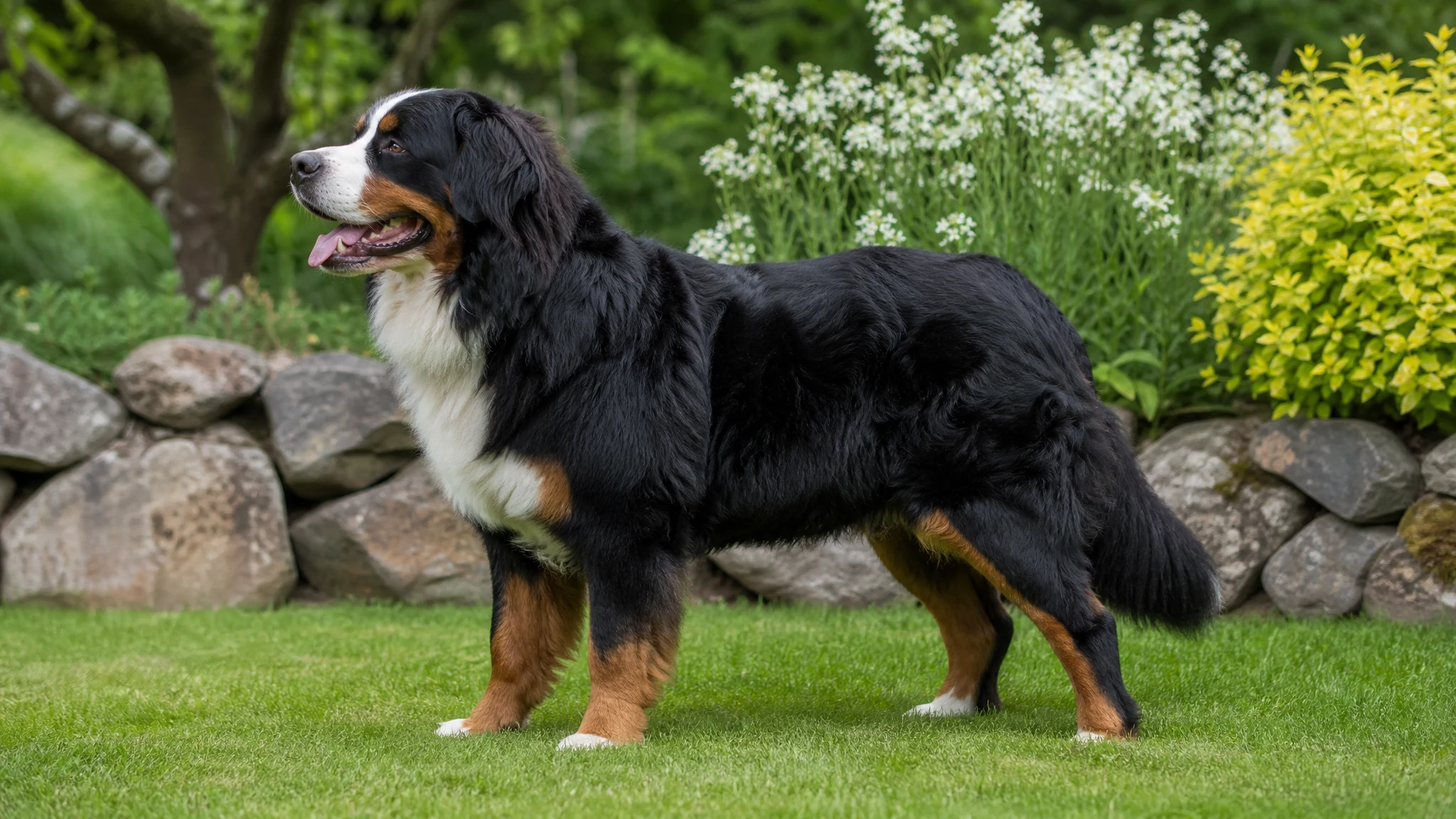
A Bernese mountain dog poodle mix is usually called a Bernedoodle. Because it has two parent breeds, no one can promise which traits a given puppy will inherit. That uncertainty shapes how you feed one.
This guide walks through the process in steps. You will learn to read a puppy's likely needs, choose a life-stage food from label data, and set up feeding habits that suit a large, deep-chested dog.
The Bernese side is the better documented one, so we lean on it. For anything about Bernedoodles themselves, such as size ranges, lifespan or health test results, we send you to the breeder and the relevant breed clubs. We will not guess.
What You Need Before You Start
- The breeder's written details on both parents, including their adult weights and any health screening results.
- A kitchen or postal scale to weigh your dog regularly.
- A standard measuring cup. Fresh and dry foods are both fed by volume or weight on their labels.
- A slow feeder bowl, kept at floor level.
- The bag or product page of any food you are considering, so you can read the nutritional adequacy statement yourself.
- A veterinarian who knows your dog. They decide what is right for an individual dog.
Step 1: Understand What a Mix Means for Planning
A cross between two breeds does not average out neatly. One puppy may lean toward one parent in size and coat, and a littermate may lean the other way. Adult size is the practical question for feeding, because it affects food choice and portions.
Ask the breeder for the adult weights of the Bernese parent and the Poodle parent. Ask how large the breeder expects the puppies to be. Treat the answer as an estimate, not a promise.
For context, PetMD lists the Bernese Mountain Dog as a large breed, with adults of 70 to 115 lb. Wikipedia gives males as 80 to 120 lb and females as 75 to 100 lb. A Bernedoodle may land anywhere around or below those figures, depending on the Poodle parent. Check with the breeder and the relevant breed clubs for Bernedoodle-specific numbers.
Step 2: Learn the Bernese Health Themes That Touch Diet
You cannot assume a mix inherits or avoids any parent's conditions. It still helps to know what the Bernese side is known for, because it informs feeding habits. Food does not prevent or treat any of these, and your veterinarian is the one to talk to about them.
- Cancers. PetMD says the Bernese is prone to several cancers, notably histiocytic sarcoma.
- Bloat (gastric dilatation-volvulus). PetMD says deep-chested dogs, dogs fed from raised bowls and dogs fed once a day are at higher risk. It advises two meals about 12 hours apart, a slow feeder and no elevated bowls.
- Hip dysplasia. PetMD lists keeping a lean body and low-intensity exercise among management measures, along with omega-3s and joint supplements. Ask your veterinarian before adding any supplement.
- Elbow dysplasia. Wikipedia reports studies with a prevalence of 13.91% to 26% in the Bernese.
On lifespan, PetMD gives 7 to 10 years for the Bernese. The Bernese Mountain Dog Club of America (BMDCA) health page says 7 to 8 years is too short and that some Berners reach their teens. No lifespan figure for Bernedoodles appears in these sources, so ask the breeder what they know about their own lines.
For a deeper look at the diet side, see our guide to the diet factors that matter for Bernese Mountain Dogs.
Step 3: Match the Food to the Life Stage
The nutritional adequacy statement on the label tells you what a food is formulated for. Whole Dog Journal explains that foods for growth or all life stages carry one of two kinds of wording:
- "including growth of large-size dogs (70 pounds or more as an adult)" means the food is suitable for large-breed puppies.
- "except for growth of large-size dogs" means it is not.
PetMD advises feeding puppies an AAFCO-compliant food designed for giant or large breeds to support steady growth, with up to four meals a day. If your puppy may reach 70 lb or more, look for the "including" wording. If the adult size is uncertain, ask your veterinarian which way to lean.
Step 4: Compare Labels, Not Marketing
We compared label data from each brand's own page. We did not run feeding trials or taste tests, and we are not rating these foods. No food here is made for Bernedoodles, and none was found that is made for Bernese either. These are large-breed formulas, listed so you can see how the label details differ.
Large-breed puppy foods
| Food | Label detail | Calories | First ingredients |
|---|---|---|---|
| Hill's Science Diet Puppy Large Breed Chicken & Brown Rice | AAFCO feeding tests for growing puppies; protein 26.7% dry matter average | 387 kcal/cup | Chicken, brown rice, whole grain oats, chicken meal, cracked pearled barley |
| Royal Canin Size Health Nutrition Large Puppy | Guaranteed protein 28.0% min, fat 14.0% min; for adult weight 56 to 100 lb, up to 15 months | 349 kcal/cup (calculated) | Chicken by-product meal, corn, wheat, chicken fat, wheat gluten |
| Victor Hi-Pro Plus Large Breed Puppy | All life stages profile; protein 30% min, fat 14.0% min | 365 kcal/cup | Chicken, chicken meal, brown rice, whole grain millet, whole grain sorghum |
| Freshpet Multi-Protein Puppy Recipe | Growth, including large size dogs (70 lbs or more as an adult); protein 16% min, fat 10% min | 241 kcal/cup (calculated) | Chicken, eggs, beef, beef liver, green beans |
Two cautions. Hill's publishes dry matter averages, not guaranteed minimums, so its protein figure cannot be compared directly with the others. And for Victor and Royal Canin, confirm the full adequacy statement on the bag to see the large-size wording.
Large-breed adult foods
| Food | Label detail | Calories |
|---|---|---|
| Hill's Science Diet Adult Large Breed Chicken & Barley | AAFCO feeding tests for adult maintenance; protein 23.8% dry matter average | 365 kcal/cup |
| Royal Canin Size Health Nutrition Large Adult | AAFCO maintenance profile; protein 24.0% min, fat 15.0% min | 360 kcal/cup (calculated) |
Kibble size was not stated on these pages, so check with each brand if that matters for your dog. Prices and availability also vary, so look at the brand's own page.
Brand pages: Hill's puppy large breed, Royal Canin Large Puppy, Victor Hi-Pro Plus Large Breed Puppy and Freshpet Multi-Protein Puppy Recipe.
Step 5: Set Portions as a Starting Point
Use the feeding guide on the food's own page as a starting point. Hill's says to adjust amounts as necessary to maintain optimal weight and to ask your veterinarian if you are unsure. Royal Canin offers a feeding calculator on its product pages.
Weigh your dog regularly and check body condition by feel and by sight. Because PetMD lists a lean body as part of hip dysplasia management in the Bernese, your veterinarian may want to keep a close eye on weight trends. Adjust portions with their guidance, not by guesswork.
Step 6: Build a Bloat-Aware Feeding Routine
- Split the daily amount into meals. For adults, PetMD advises two meals about 12 hours apart. Puppies may need up to four.
- Use a slow feeder.
- Keep the bowl at floor level, not raised.
- Ask your veterinarian about the right exercise timing around meals for your dog.
If your dog's belly looks swollen, or it retches without producing anything, call a veterinarian right away.
Step 7: Keep Up With the FDA's Diet and Heart Information
The FDA has investigated a possible link between certain diets and canine dilated cardiomyopathy (DCM). Its most recent update is dated 12/23/2022. The FDA says it does not intend to release further public updates until there is meaningful new scientific information.
If you are choosing between foods and this concerns you, read the FDA page and talk to your veterinarian. Do not switch foods based on a headline alone.
Tips
- Switch foods gradually unless your veterinarian says otherwise.
- Read the full adequacy statement, not just the front of the bag.
- Count treats and toppers in the daily total. A wet food such as Hill's Adult Chicken & Barley Entree has 369 kcal per 13 oz can, so a spoonful adds up.
- Keep notes on weight, appetite and stool, and share them at checkups.
- Ask for health screening records on both parents before you commit to a puppy.
Common Mistakes to Avoid
- Assuming a Bernedoodle is a smaller Bernese. Size depends on the individual puppy and its parents.
- Choosing a food marked "except for growth of large-size dogs" for a puppy who may be large.
- Feeding one big meal a day. PetMD names this as a bloat risk factor.
- Using a raised bowl. PetMD advises against elevated bowls for bloat risk.
- Adding supplements on your own. Ask your veterinarian first.
- Treating the feeding chart as fixed. It is a starting point, and bodies change.
What to Expect
A food that suits your dog may be associated with steady growth, a healthy-looking coat, good energy and normal stools. Results vary from dog to dog. No food can promise to prevent or treat a health condition.
Expect to adjust. Portions often change as a puppy grows and again as an adult's activity shifts. Your veterinarian can help you read weight and body condition over time.
Sources
- PetMD, Bernese Mountain Dog breed page
- Bernese Mountain Dog Club of America, health page
- Whole Dog Journal, nutritional adequacy statements
- FDA CVM, diets and canine dilated cardiomyopathy
- Wikipedia, Bernese Mountain Dog
- Hill's Science Diet Adult Large Breed
- Hill's Science Diet Adult Chicken & Barley Entree
- Royal Canin Size Health Nutrition Large Adult