Caring for a Newborn Bernese Mountain Dog Puppy: The First Few Weeks
General nutrition information compiled from product labels and published sources, not veterinary advice. Your veterinarian is the right person to choose a diet for your dog, especially one with a health condition.
A baby Bernese Mountain Dog starts life small, blind and almost entirely dependent on its mother. The first weeks are mostly about protecting that bond, keeping the puppy warm and clean, and watching closely for trouble.
This guide walks through the setup, the daily routine and the mistakes to avoid. It also looks at what to look for on a puppy food label, because the move to solid food comes sooner than many new owners expect. Where a decision depends on a specific puppy's health or age, your veterinarian is the one to ask.
What You Need Before the First Day
- A whelping box or other low-sided, easy-to-clean enclosure, large enough for a big-breed mother to lie down fully
- Clean, washable bedding you can swap often
- A safe, draft-free room with steady warmth, away from foot traffic
- A gram or kitchen scale to track each puppy's weight
- A notebook for weights, feedings and anything that seems off
- Fresh water and good food for the mother
- Your veterinarian's phone number, including the emergency clinic after hours
You do not need supplements, puppy formula or special gadgets unless your veterinarian tells you to use them.
Step 1: Set Up a Quiet, Warm Space
Newborn puppies cannot regulate their body temperature well, so the room matters more than almost anything else you do. Choose a calm spot and keep the temperature steady. Your veterinarian can tell you what range suits your litter.
Keep bedding dry. Damp bedding chills puppies quickly. Check for drafts at puppy level, since the floor is often cooler than the room.
Tip: Set the box up before the puppies arrive, so the mother can settle in and you are not rearranging things around newborns.
Step 2: Let the Mother Lead
In the first weeks, a healthy mother does most of the work. She feeds, cleans and warms the litter. Your job is to support her, not take over.
- Give her a steady supply of fresh water and food
- Keep visitors away, especially children and other pets
- Handle puppies gently and briefly, with clean hands
- Watch that every puppy gets a turn to nurse
Large breeds have big litters and a big mother, so watch the box for squashing risks. A box with a low rail that the puppies can slip behind is a common approach. Ask your veterinarian or the breeder what works for your setup.
Step 3: Weigh and Check Each Puppy Daily
Weigh every puppy at the same time each day and write the number down. A puppy that stops gaining, or loses weight, needs a call to your veterinarian the same day.
At each check, look for these signs of a puppy doing well:
- Warm to the touch, not cold or limp
- Nursing eagerly and sleeping quietly between meals
- Clean, dry and active when picked up
A puppy that cries constantly, is pushed away from the pack or feels cold is a reason to phone the clinic, not to wait and see.
Step 4: Keep the Box Clean
Change soiled bedding promptly and wash your hands before and after handling the puppies. A clean box lowers the chance of problems spreading through a litter. Use only cleaning products your veterinarian says are safe around newborns.
Step 5: Plan the Vet Visits
Book a first checkup early. Your veterinarian will set the schedule for exams, deworming and vaccines. Do not guess at timing or doses, and do not give any supplement or medicine to a newborn unless a veterinarian says to.
Bernese Mountain Dogs are a breed with known health concerns. PetMD notes that the breed is prone to several cancers, notably histiocytic sarcoma. The Bernese Mountain Dog Club of America health page is a good place to learn about the breed's health and about screening that breeders use. These are long-term topics to discuss with your veterinarian, not things a puppy's first-weeks diet can settle.
Step 6: Ask Your Vet About Weaning
The timing of the first solid foods depends on the litter and the mother, so ask your veterinarian rather than relying on a fixed age. When the time comes, move slowly and watch each puppy's stools and appetite.
The food you choose then matters. PetMD advises feeding puppies an AAFCO-compliant food designed for giant or large breeds, to support steady growth. It also says puppies can be fed up to four meals a day.
How to Read a Large-Breed Puppy Food Label
Bernese Mountain Dogs are a large breed. PetMD lists adult weight at 70 to 115 lb, and other sources give slightly different ranges. That puts them in the group that needs a food labeled for large-breed growth.
Whole Dog Journal explains the key label line. Foods for growth or for all life stages carry one of two statements:
- An "including growth of large-size dogs (70 pounds or more as an adult)" statement, which means the food suits large-breed puppies
- An "except for growth of large-size dogs" statement, which means it does not
Because adult Bernese weigh 70 lb or more, look for the "including" wording. If a label does not show the full statement, check with the brand.
Label data for some large-breed puppy foods
We compared label data from the brand pages. We did not run feeding trials or taste tests, so this is a reading of printed information, not a ranking. No brand has a Bernese-specific formula that we found, so these are size-appropriate puppy formulas. Check each brand about kibble size, which the pages did not state.
| Food | AAFCO wording on the page | First ingredients | Calories |
|---|---|---|---|
| Hill's Science Diet Puppy Large Breed Chicken & Brown Rice | Complete and balanced nutrition for growing puppies, shown by feeding tests | Chicken, brown rice, whole grain oats, chicken meal, cracked pearled barley | 387 kcal per cup |
| Royal Canin Size Health Nutrition Large Puppy | Growth, including growth of large-size dogs | Chicken by-product meal, corn, wheat, chicken fat, wheat gluten | 349 kcal per cup (calculated) |
| Victor Hi-Pro Plus Large Breed Puppy | All life stages (check the brand for the large-size clause) | Chicken, chicken meal, brown rice, whole grain millet, whole grain sorghum | 365 kcal per cup |
| Freshpet Multi-Protein Puppy Recipe | Growth, including large size dogs (70 lbs or more as an adult) | Chicken, eggs, beef, beef liver, green beans | 241 kcal per cup (calculated) |
Note that Hill's publishes protein and fat as dry matter averages, not guaranteed minimums, so those numbers cannot be compared directly with a guaranteed analysis. Calories per cup also differ because the foods are different forms.
None of these foods is claimed to have any medical effect. For more on how diet fits a Bernese's life, see Bernese Mountain Dog nutrition and the diet factors that matter.
Step 7: Use Label Feeding Guides as a Starting Point
Feeding amounts on a bag or website are starting points, based on a dog's weight and age. Royal Canin offers a calculator for its large puppy food. Hill's says to adjust feeding amounts as necessary to maintain optimal weight, and to ask your veterinarian if you are unsure.
Weigh the puppy regularly and adjust with your veterinarian. If a puppy has a health condition, confirm the amounts with your veterinarian before you follow any chart.
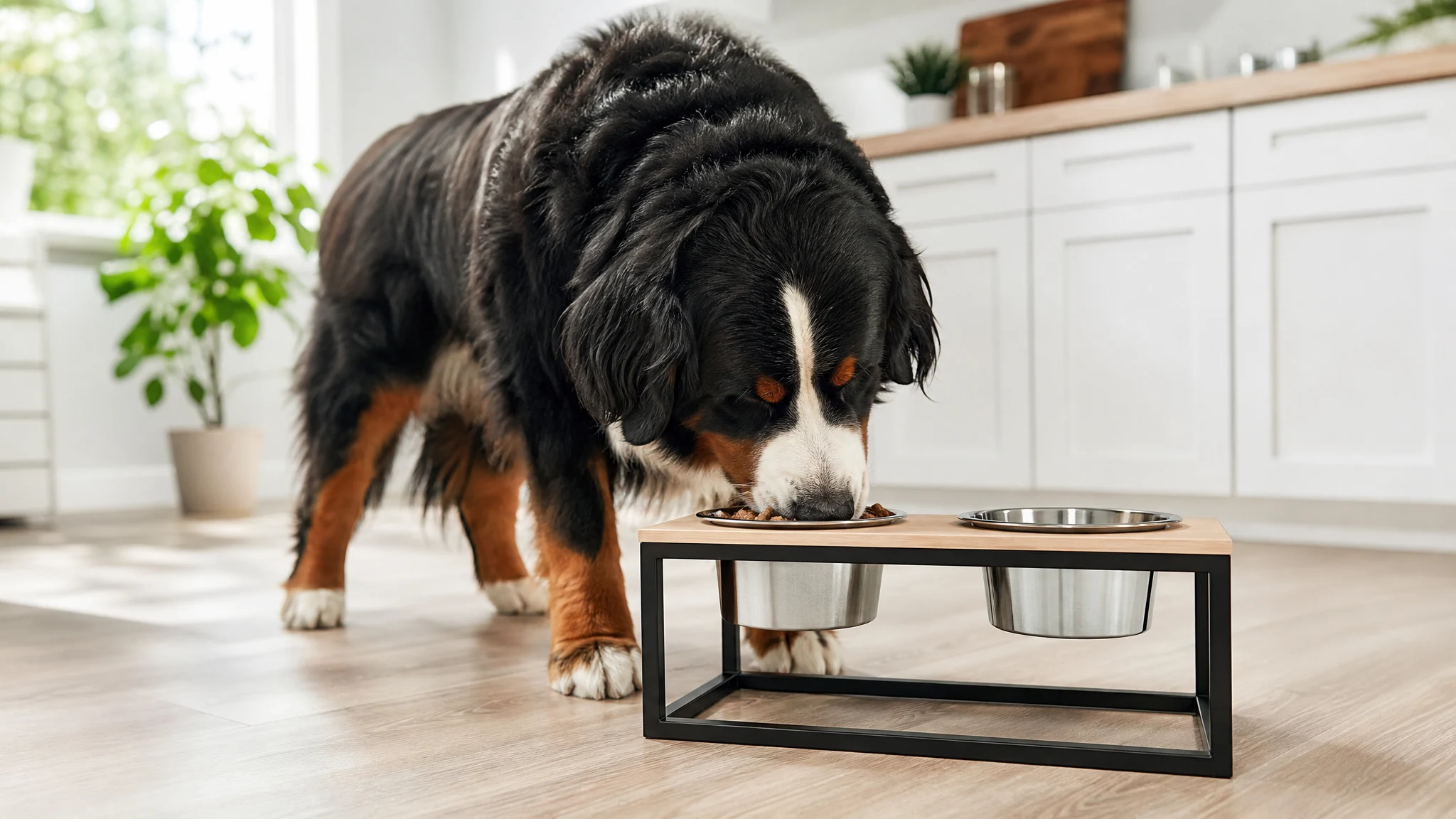
PetMD advises two meals about 12 hours apart, a slow feeder and no raised bowls for bloat risk, since Bernese are deep-chested. Ask your veterinarian how to apply that advice to a growing puppy that eats more often.
Common Mistakes to Avoid
- Handling too much. Newborns need rest and the mother's attention.
- Letting the room cool. Chilling is a real risk for small puppies.
- Choosing an adult or "except for" food. Check the label wording for large-size growth.
- Adding supplements on your own. Do not give any to a puppy unless your veterinarian directs it.
- Waiting on a weak puppy. Call the clinic early.
- Switching foods suddenly. Change foods gradually and ask your veterinarian how.
- Letting a puppy get heavy. PetMD lists keeping a lean body as part of managing hip dysplasia.
What to Expect
With a calm, warm setup, a healthy mother and regular vet checks, many litters settle into a steady rhythm of nursing and sleeping. Puppies that gain weight daily and stay warm and active are generally doing what they should. Results vary between puppies, and no routine can promise a particular outcome.
As puppies grow, a food with the large-size growth statement and steady, vet-guided portions are meant to support gradual growth. Whether any individual puppy is on track is a question for your veterinarian.
Sources
- PetMD, Bernese Mountain Dog breed page
- Bernese Mountain Dog Club of America, health page
- Whole Dog Journal, In the Fine Print: Nutritional Adequacy Statements
- Hill's Pet, Science Diet Puppy Large Breed
- Royal Canin, Size Health Nutrition Large Puppy
- Victor, Hi-Pro Plus Large Breed Puppy
- Freshpet, Multi-Protein Puppy Recipe